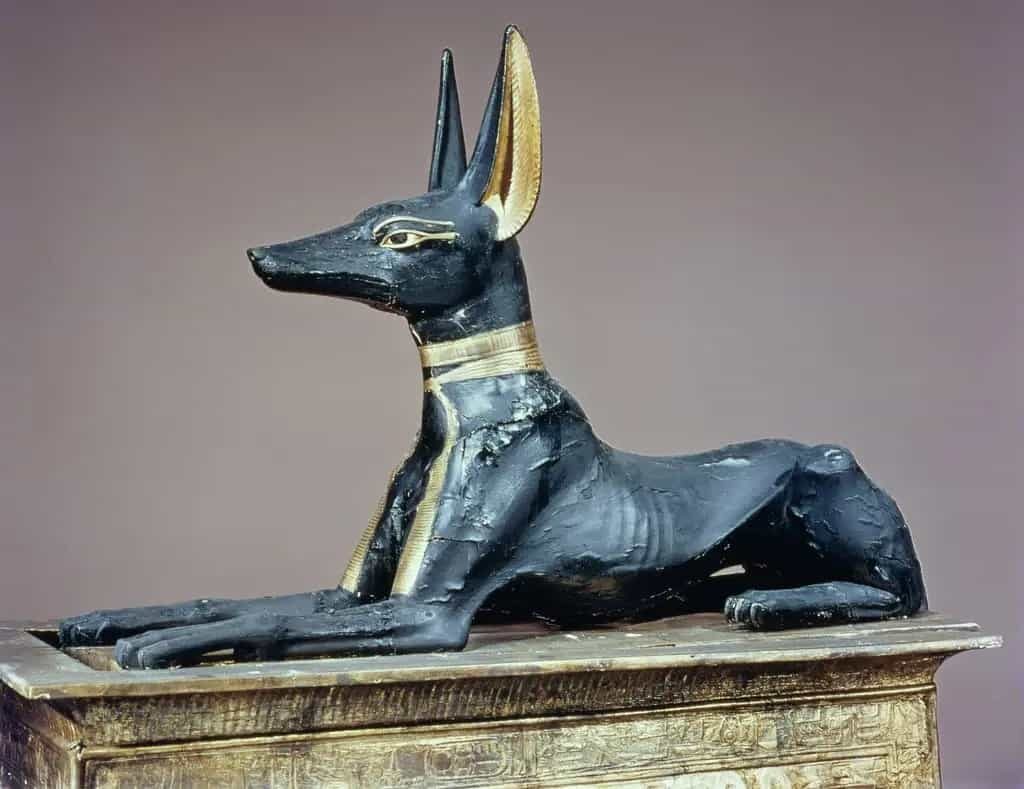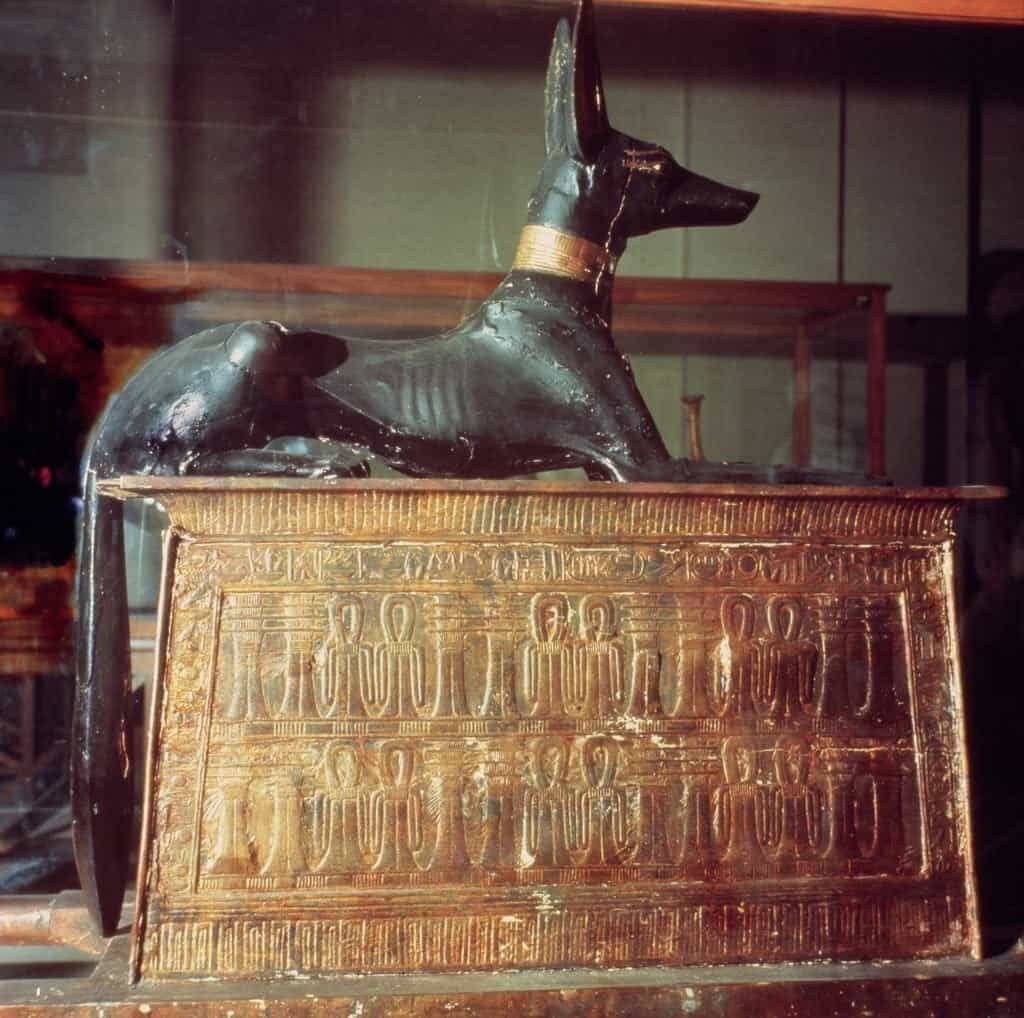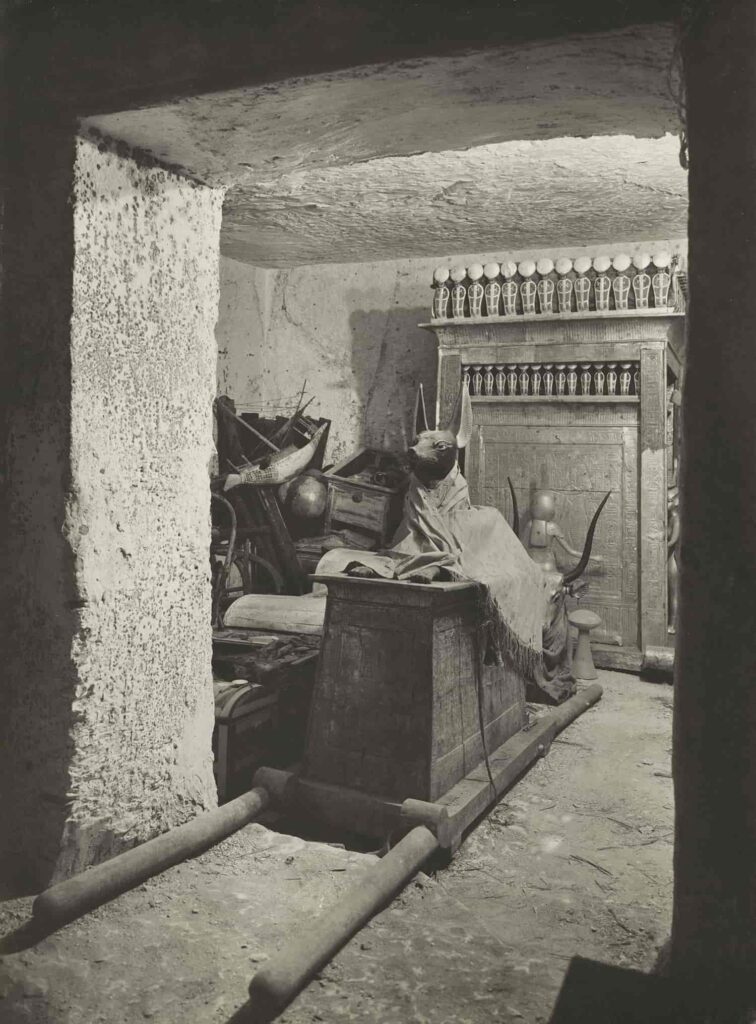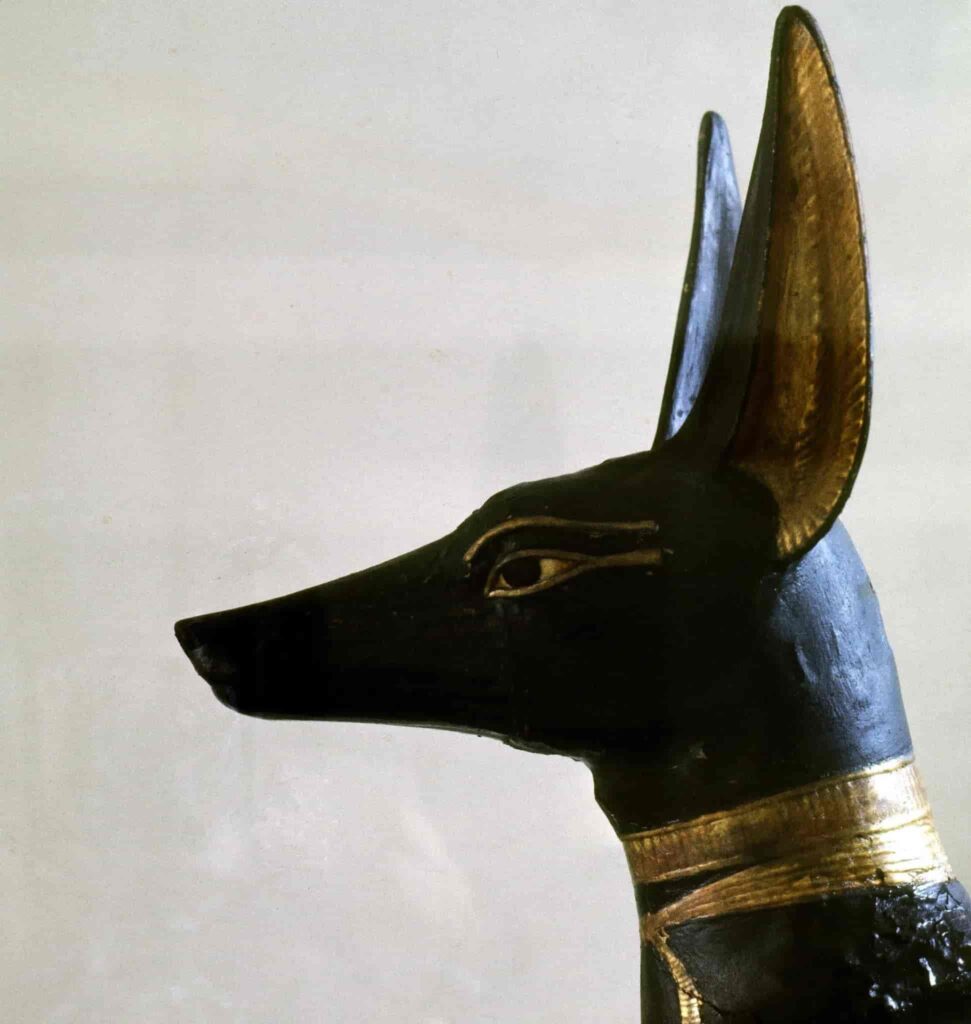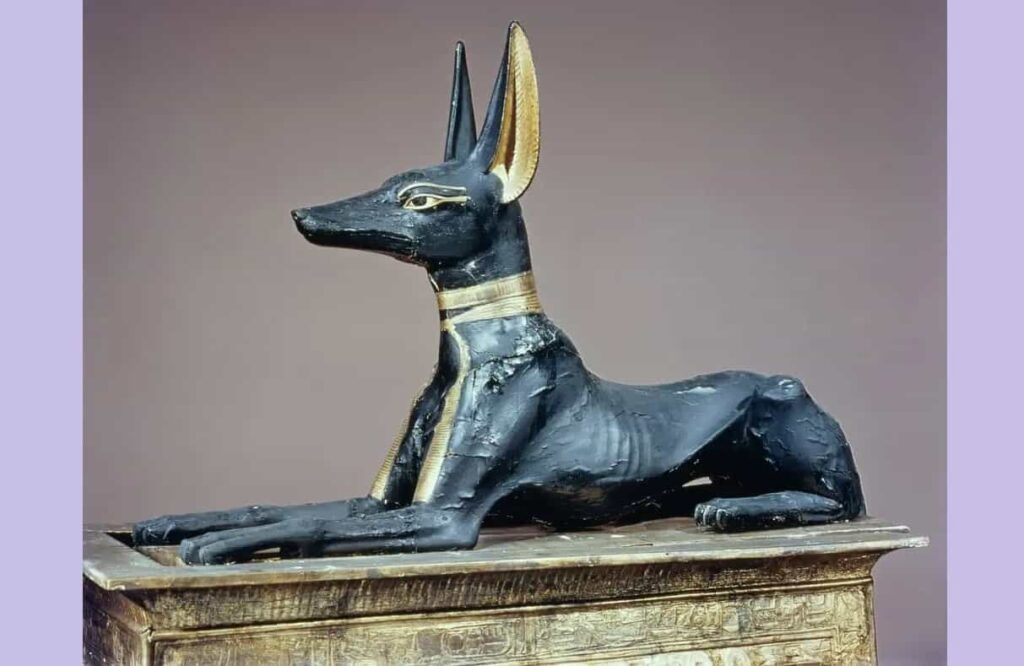
The Anubis Shrine consists of an impressive black-painted wooden statue of the Egyptian god Anubis. It was discovered by Howard Carter guarding the entrance to Tutankhamun’s Treasury. As one writer described it, the statue “served as an ancient Egyptian ‘No Trespassing’ sign, promising eternal punishment to those who defied it.”
The shrine is one of the most significant funerary objects found in the tomb of Pharaoh Tutankhamun.
What is it?
The statue depicts Anubis in the form of a jackal resting atop the shrine. More than one meter (3.3 feet) long, it was positioned protectively near the entrance to the Treasury.
The life-size statue is carved from wood coated with black resin and features gilded ears, a collar, and decorative elements. The shrine is decorated with inscriptions and religious imagery, including symbols associated with the gods Isis and Osiris.
What does it represent?
Anubis was the god of mummification, embalming, and the protection of the dead. The shrine is decorated with djed pillars, symbols of stability that were closely associated with Osiris. Inscriptions run horizontally along the upper edges and vertically down the sides of the shrine.
Evidence suggests that Anubis was originally draped with a linen cloth bearing a cartouche of Tutankhamun’s father, Akhenaten. Some scholars have proposed that certain objects from Tutankhamun’s tomb may have originally been produced for members of the Amarna royal family. The shrine itself was hollow and contained various ritual objects associated with protection, rebirth, and the afterlife, including blue faience amulets and small baboon figurines.
Other Significance
The Anubis Shrine was probably used during Tutankhamun’s funeral procession before being placed in front of the canopic shrine within the Treasury. Its westward orientation—the direction associated with the realm of the dead in ancient Egyptian belief—emphasizes Anubis’s role as guardian of the necropolis.
Supporting this interpretation is the discovery of a small unfired clay “magic brick” positioned near the entrance to the Treasury in front of the shrine. This was the fifth magic brick found in Tutankhamun’s tomb; traditionally, four such bricks were placed in niches corresponding to the cardinal directions.