The Disc of Sabu is a mysterious 5,000-year-old Egyptian artifact discovered in 1936 by Walter Emery. Made of fragile schist, its unique tri-lobed design resembles a modern propeller, sparking intense debate between archaeologists who see a ritual vessel and theorists suggesting advanced ancient technology.
The Discovery in Saqqara (1936)
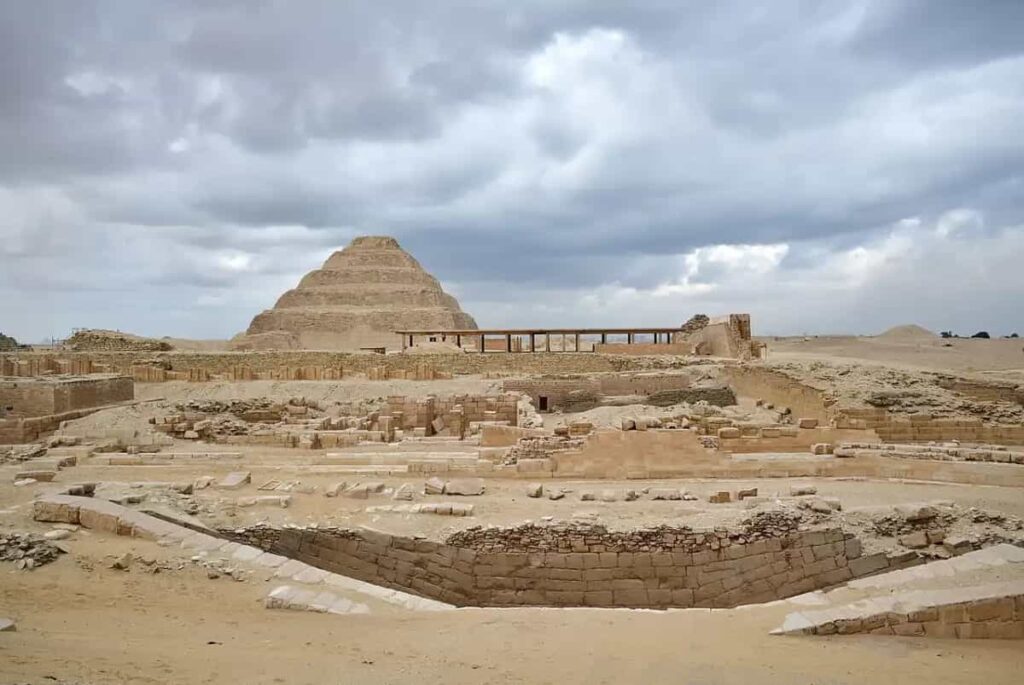
An intriguing artifact was unearthed on January 19, 1936, by British archaeologist Walter Bryan Emery during an excavation at the Saqqara necropolis in Egypt. The discovery took place in mastaba S3111, the tomb of a prominent Egyptian official named Sabu, who lived during the First Dynasty (circa 3000–2800 BC).
A Design from the Future? Dimensions & Material
The artifact in question is a concave slate disc measuring 61 centimeters (24 inches) in diameter and standing at a maximum height of 10.6 centimeters (4.2 inches). It features a central hole about 8 centimeters (3.1 inches) in diameter, surrounded by what appear to be three “wings” or lobes extending from the outer edge. This distinctive configuration gives the disc an overhead resemblance to a steering wheel with three wide spokes.
Initially found in fragments within the burial chamber alongside Sabu’s skeleton, Emery painstakingly restored the artifact. Today, it is exhibited in the Egyptian Museum in Cairo under the name “Sabu Disk.” Remarkably, it remains the only known ancient Egyptian object with this unique lobed shape.
While the First Dynasty saw the production of numerous large, high-quality stone bowls and plates, as well as finely worked slate pieces at Saqqara, none match the distinctive form of the Sabu Disk. This suggests it was a specially crafted object reserved exclusively for Sabu, likely reflecting his elevated status in ancient Egyptian society.
The Greatest Mystery: What Was its Function
| Theory | Explanation | Scientific Verdict |
| Ritual Bowl | A container for incense or offerings. | Most Likely |
| Ancient Flywheel | A device to store rotational energy. | Unproven |
| Airbus Analysis | Aerodynamic properties for throwing. | Intriguing |
Its function remains unknown. Emery cautiously suggested it may have served as a type of container mounted on a support, although no remains of such a support were found.
Other scholars propose that it may imitate contemporary metal objects, or that its fragile nature made it unsuitable for practical use, limiting it to a decorative or symbolic role.
More speculative theories claim it functioned as a large triple-flame lamp or even a flywheel designed to store rotational energy. Engineers from Airbus examined 3D replicas of the artifact and suggested it exhibits aerodynamic properties, raising the possibility that it could have been used as a specialized throwing object.
However, its radial symmetry makes it unsuitable as a propeller or turbine, despite claims from proponents of pseudoscientific interpretations.
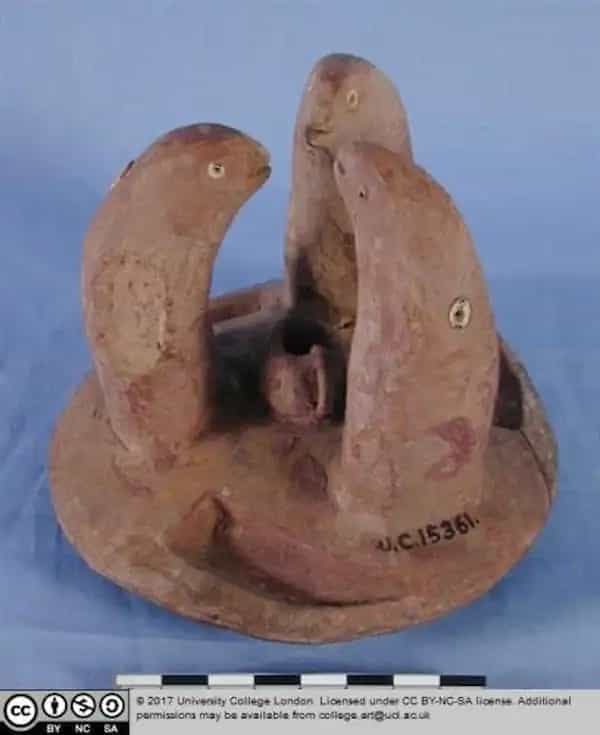
An object somewhat similar in shape to the Sabu Disk is a clay figurine dating to the Naqada II period (a phase of Egypt’s Predynastic era, approximately 3500–3400 BC), now housed in the Petrie Museum of Egyptian Archaeology in London.
This figurine depicts a circular form adorned with four snakes—three with raised heads—encircling a central container-like element, while a fourth snake appears to be drinking from it.
Sabu, believed to have lived during the reigns of Pharaohs Den and Anedjib (and possibly the latter’s son), likely held a position as an administrator or provincial governor.
When his tomb was discovered, Sabu’s remains were still inside a wooden sarcophagus, placed on its side in accordance with burial practices of the time.
Within the funerary chamber, fragments of Sabu’s belongings were preserved—primarily stone and possibly metal objects—including stone vessels and the distinctive disc.
Despite its unknown function, the Sabu Disk holds considerable historical importance. It stands as a striking testament to the advanced stone craftsmanship of the late Predynastic period and the First Dynasty, demonstrating the remarkable skill of ancient Egyptian artisans even before the age of the great pyramids.
Frequently Asked Questions About the Sabu Disk
A: The Sabu Disk is a unique 5,000-year-old Egyptian artifact discovered in 1936. It is a tri-lobed schist bowl known for its complex, futuristic design that resembles a modern-day propeller.
A: While its shape is aerodynamic, engineers and archaeologists believe it was not a propeller. Its fragile material (schist) and the era’s lack of complex machinery suggest it was likely a ritual vessel or a decorative item.
A: It was discovered by Walter Emery in the tomb of Prince Sabu (Mastaba S3111) at the Saqqara necropolis in Egypt.
A: The artifact is meticulously carved from a single piece of metasiltstone, often referred to as schist or slate, showcasing advanced ancient craftsmanship.