Hair was an important part of personal appearance and identity in ancient Egypt. Hairstyles, wigs, and hair extensions could communicate age, gender, social position, and occasion, while hair also had religious and symbolic significance.
Egyptian art frequently depicts people with carefully arranged hairstyles, while archaeological discoveries have provided actual examples of wigs, hair extensions, combs, and other grooming equipment. These finds show that hair care was an important part of everyday life—not simply a matter of appearance.
Hair could also carry powerful symbolic meanings. In ancient Egyptian art, grasping an enemy by the hair became a visual expression of royal dominance and victory. Hair likewise appears in funerary and religious contexts, reflecting the importance of personal appearance and bodily transformation in Egyptian culture.
Hair in Ancient Egyptian Life: Style, Health, and Grooming
Hair was carefully managed in ancient Egypt. Men and women could wear their natural hair in different styles, shave or closely crop it, or use wigs and hair extensions to create more elaborate appearances. Wigs were worn by both men and women and could be made from human hair. Some surviving examples demonstrate an extraordinary level of craftsmanship.
The hot Egyptian climate and concerns about cleanliness likely contributed to practices such as shaving or closely cutting the hair. Razors, combs, hairpins, and other grooming tools have been found in archaeological contexts, demonstrating the importance of maintaining one’s appearance.
Ancient Egyptians were also concerned about hair loss, baldness, and premature graying. The Ebers Papyrus, copied around 1550 BCE, preserves numerous prescriptions concerning hair, including treatments intended to remove or prevent gray hair and others intended to encourage hair growth. Some prescriptions even claimed to restore the appearance of youth.
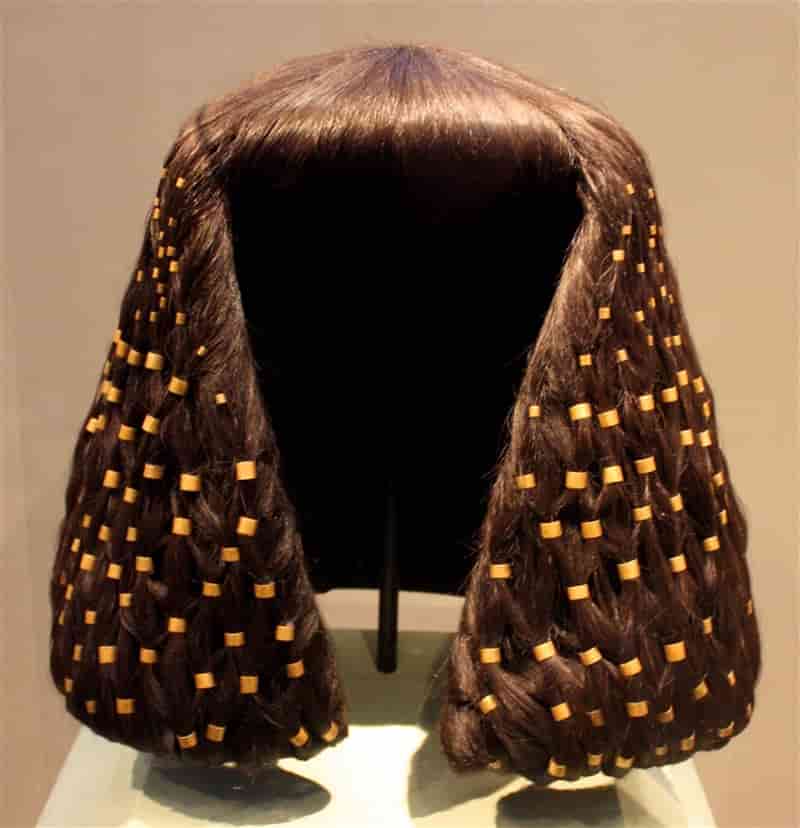
Wigs offered another way to control one’s appearance. They could be elaborately styled, curled, braided, or decorated. A surviving 18th-Dynasty wig in the British Museum, for example, is made from human hair treated with beeswax and resin and was probably worn by a high-status man.
Hair extensions were also used. At Thebes, archaeologists discovered a basket containing bundles of human-hair extensions and braids dating to the New Kingdom. These could be used to augment a person’s natural hair and create fashionable hairstyles.
Hair therefore played a role in both practical grooming and personal expression. Egyptian hairstyles changed over time, and different styles could be associated with particular periods, social groups, or occasions.
Hairstyles, Wigs, and Social Status
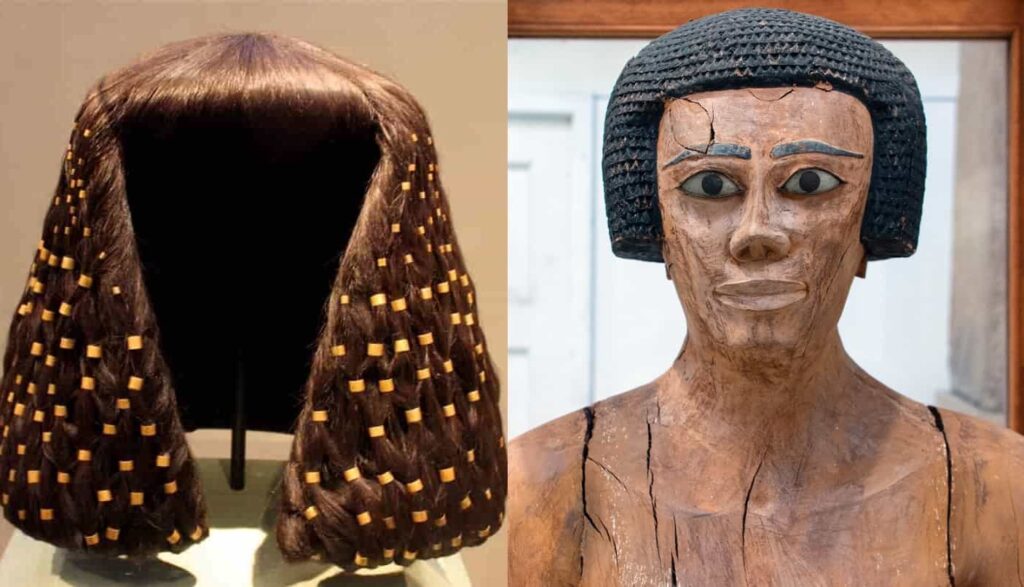
Wigs were not simply substitutes for natural hair. They were fashionable items that allowed Egyptians to create carefully controlled hairstyles. Surviving examples range from relatively simple forms to highly elaborate wigs made from human hair and treated with materials such as beeswax.
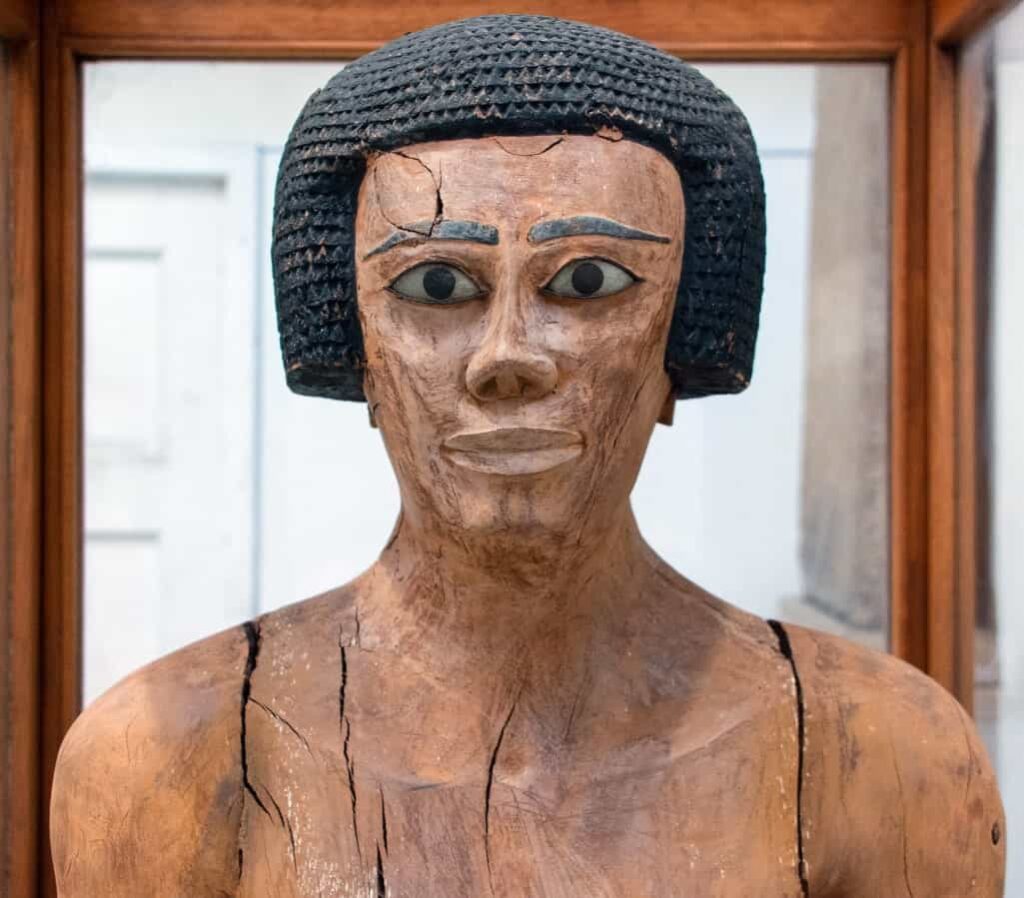
The archaeological record also demonstrates that elaborate hair arrangements were not restricted to royal women. Men of high status wore sophisticated wigs as well. The Metropolitan Museum of Art, for example, preserves an Old Kingdom statue of the official Mitry wearing a carefully arranged short wig with overlapping curls.
Women could also use false braids and hair extensions to enhance their own hair. A New Kingdom burial at Thebes contained numerous braids and loose locks specifically associated with creating a fashionable hairstyle.
Because Egyptian artists often represented people wearing idealized or conventional hairstyles, it is not always possible to determine whether a particular hairstyle represents natural hair, a wig, or a combination of the two. Archaeological evidence, however, confirms that wigs and hair extensions were genuine parts of Egyptian grooming practices.
Hair and Egyptian Funeral Rites
Hair also appears in the context of mourning and funerary rituals. Egyptian funerary scenes depict mourners expressing grief through dramatic gestures, including placing dust on their heads. The British Museum’s papyrus depicting the funeral of Ani, for example, shows mourners performing recognizable gestures of mourning.
Actual hair was also preserved and used as part of personal grooming and burial equipment. Archaeologists have discovered braids, hair extensions, and wigs associated with burials, providing direct evidence that hair-related objects could accompany the deceased.
Hair could therefore have both practical and symbolic importance in funerary contexts. Wigs and hairpieces were sometimes placed in tombs alongside other personal possessions, while representations of the deceased often show carefully styled hair or wigs.
Hair in Egyptian Art and Religion
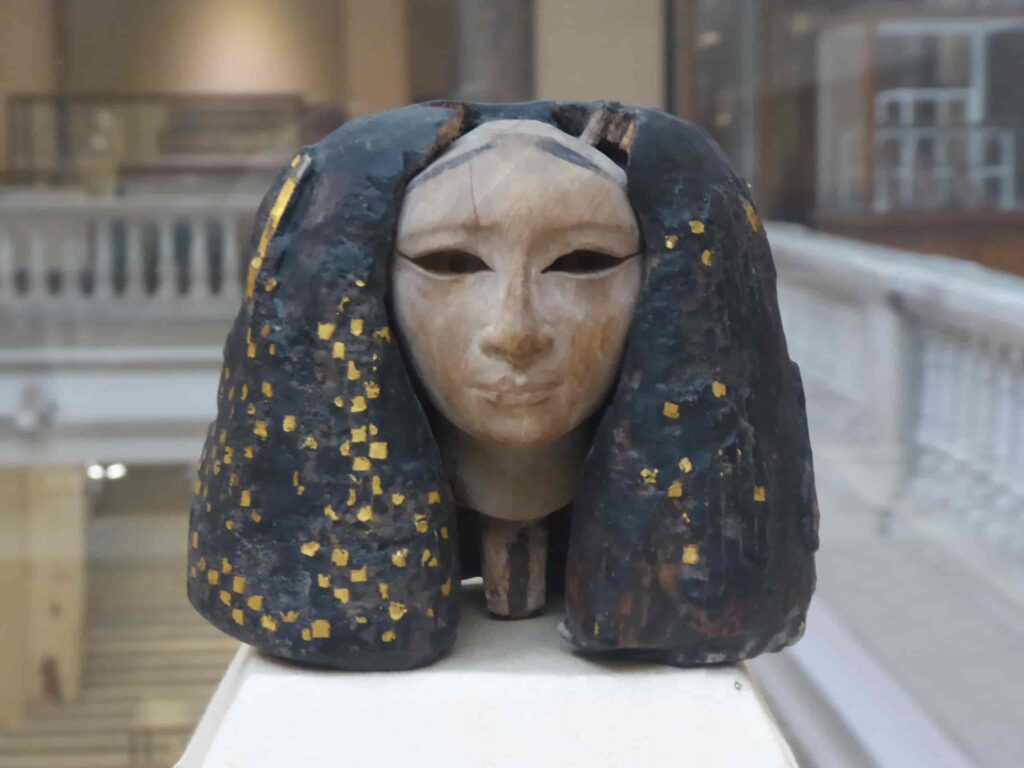
Hairstyles were also an important part of Egyptian artistic conventions. Gods, kings, queens, officials, and private individuals were frequently shown with distinctive hairstyles or wigs that helped identify their status and role.
The tripartite wig, for example, became a particularly recognizable style in representations of Egyptian royalty and deities. The Metropolitan Museum preserves numerous examples, including representations associated with the New Kingdom and the Amarna Period.
Isis was also frequently represented wearing a long wig or hairstyle associated with her divine identity. In Egyptian art, the appearance of a deity’s hair and headdress was not merely decorative; it could form part of the visual language used to communicate divine identity and status.
From simple cropped hairstyles to elaborate human-hair wigs, ancient Egyptian hair culture reveals how closely personal appearance was connected with identity, fashion, status, religion, and daily life.
Far from being merely a matter of grooming, hair in ancient Egypt was an important part of how people presented themselves—and how artists represented them.