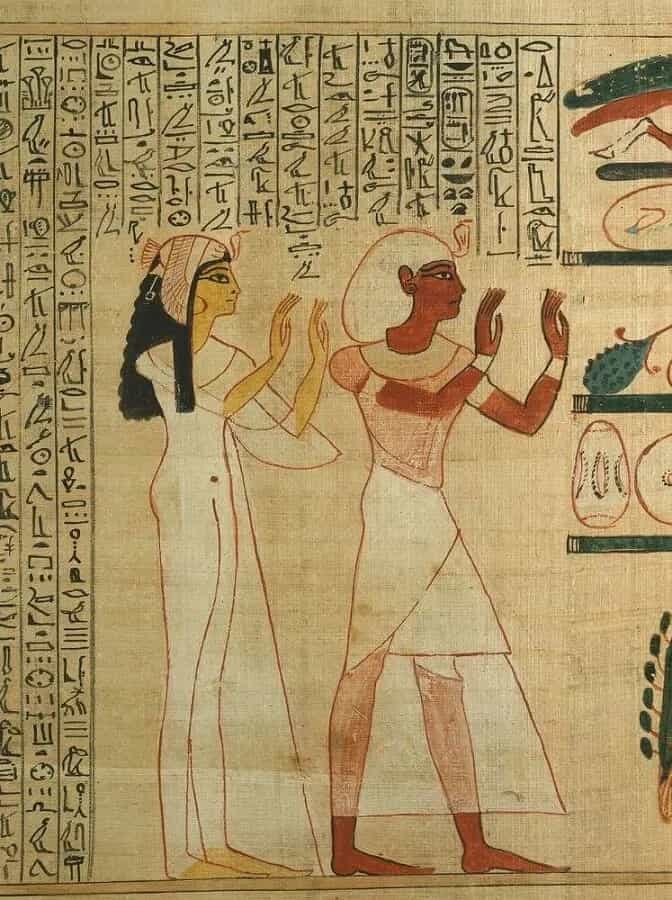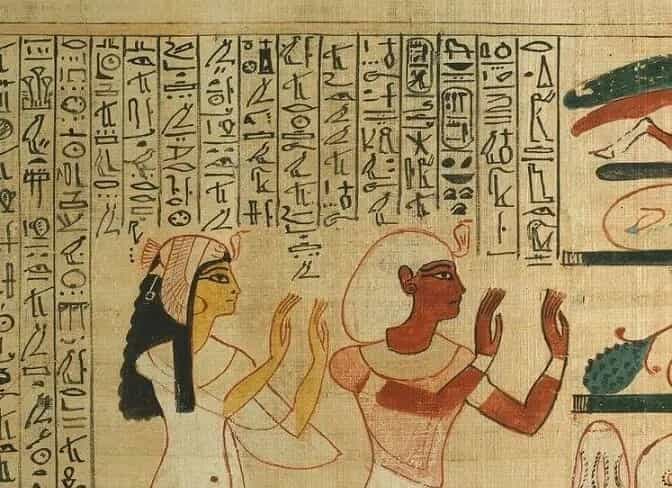
The mummy of Queen Nodjmet was among the remarkable discoveries made in the Deir el-Bahari Royal Cache, a hidden burial cache discovered near the temple of Hatshepsut at Thebes. The cache was officially opened in 1881 and contained the mummies and funerary equipment of numerous members of Egypt’s royal and elite families, including several New Kingdom pharaohs.
Among the royal mummies found there were Thutmose III, Seti I, and Ramesses II. The cache had been created when earlier royal burials were transferred and concealed for protection, probably during the late New Kingdom and early Third Intermediate Period.
Nodjmet was a prominent woman of the late 20th and early 21st Dynasties. She was the wife of Herihor, the powerful High Priest of Amun at Thebes, who rose to great prominence during the reign of Ramesses XI. Nodjmet is also known from two Books of the Dead, one of which identifies her as the King’s Mother.
Herihor’s mummy has never been identified among the remains from the Deir el-Bahari cache, and his burial place remains unknown.
A remarkably lifelike mummy
Nodjmet’s mummy provides an important example of changing mummification practices during the early 21st Dynasty. The embalmers took considerable care to give her body a more lifelike appearance.
Artificial eyes made from black and white stone were placed in her eye sockets, creating the appearance of open, living eyes. Scholars have associated this type of treatment with changing approaches to the presentation of the deceased during the Third Intermediate Period.
The embalmers also used packing materials to restore the body’s natural contours. Sawdust was used to fill areas beneath the skin and around the face and body, helping restore fullness to the cheeks and other parts of the body. Similar packing techniques became increasingly characteristic of elite mummification during this period.
Parts of Nodjmet’s face and body were also colored, further enhancing the lifelike appearance of the mummy. Her eyebrows were recreated using human hair, and she was given an elaborate wig. These treatments helped conceal the effects of age and the physical changes caused by mummification.
Nodjmet’s mummy therefore provides a fascinating glimpse into the changing ideals of mummification in ancient Egypt. Rather than simply preserving the body, the embalmers sought to reconstruct an idealized and lifelike appearance for the deceased in the afterlife.