Guarded by ancient seals for an astonishing 3,245 years, the burial of Tutankhamun revealed a treasure trove that left the world in awe when Howard Carter discovered the tomb in 1922.
The tomb of the young pharaoh stands out not only for the extraordinary collection of artifacts it contained, but also because the burial chamber itself had remained remarkably intact despite the tomb having been entered and robbed in antiquity.
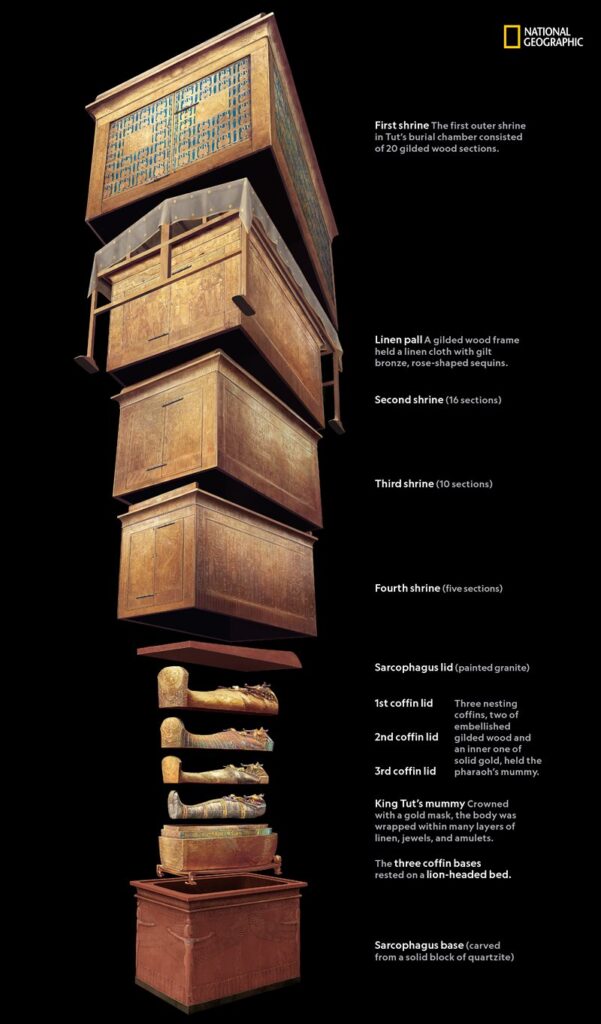
Tutankhamun’s burial chamber contained four nested gilded wooden shrines surrounding a massive quartzite sarcophagus, which in turn contained three nested coffins.
The tomb’s survival into modern times was probably helped by its location beneath the debris accumulated around the entrance of the later tomb of Ramesses VI. This concealed Tutankhamun’s tomb from later tomb builders and helped protect it from being rediscovered and extensively plundered.
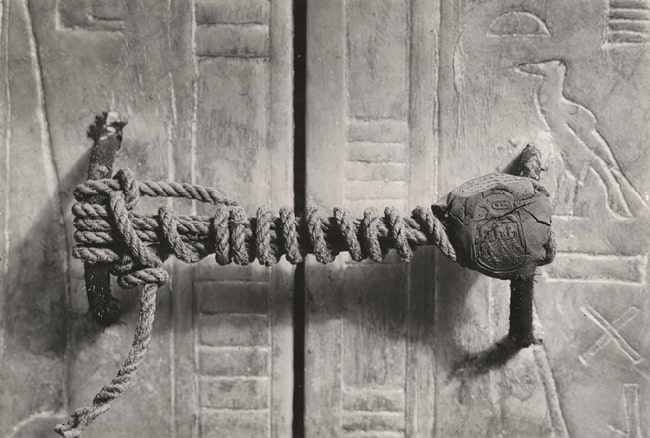
Although the tomb had been breached in antiquity, the doors of the second and third shrines still carried their original clay sealings. Harry Burton’s photographs documented one of these remarkable seals in January 1924. The intact necropolis seal indicated that the shrine—and the royal burial behind it—had not been entered since the burial.
The seal featured the familiar image of Anubis, the jackal-headed god associated with cemeteries and the protection of the dead, above nine bound enemies—the emblem known as the Royal Necropolis Seal. Carter himself recorded that the seal on the second shrine was intact and carried both the king’s seal and the Royal Necropolis Seal.
Carter and his financial backer, Lord Carnarvon, already knew that the tomb had been disturbed in antiquity. The entrance showed evidence of an ancient break-in that had subsequently been repaired and resealed.
Inside, the disordered objects, damaged artifacts, and missing valuables provided further evidence that robbers had entered the tomb. Yet the burial chamber and the shrines containing Tutankhamun’s mummy had escaped the ancient robbers.
Then came one of the most enduring legends surrounding the discovery.
According to a later story, Carter supposedly found a clay tablet in the antechamber bearing the ominous words:
“Death will slay with his wings whoever disturbs the peace of the pharaoh.”
But there is no reliable archaeological evidence that such a tablet ever existed. It was never properly cataloged or photographed, and the inscription is generally regarded as part of the modern legend surrounding Tutankhamun’s tomb.
The story nevertheless helped create the sensational “Curse of the Pharaohs,” the popular belief that disturbing an ancient Egyptian burial could bring illness, bad luck, or death.
The real story is even more fascinating: the tomb was robbed—but the royal burial itself remained sealed for more than three millennia.