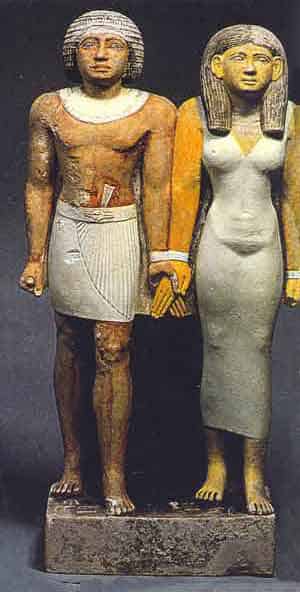
The Jeneret House was an important institution associated with royal women and children in ancient Egypt. Often compared with a royal harem, it was more than a residence for the pharaoh’s wives. It was connected to the royal household’s economic activities, the upbringing of children, musical performances, and the administration of royal women’s affairs.
The term Jeneret House, also written as Per Kheneret, is associated with the ancient Egyptian institution that Egyptologists commonly call the royal harem. However, this comparison requires care: the Egyptian institution was not necessarily organized like the harems of later historical periods.
Although the details varied over time, the royal harem played an important role in palace life, bringing together royal women, children, attendants, and officials within a broader system of royal administration.
What Was the Jeneret House?
The Jeneret House was part of the institutional world of the Egyptian royal court. Rather than referring exclusively to a building, the term can be understood in connection with the community of royal women and children, their residences, and the administrative and economic activities that supported them.
Its inhabitants could include the king’s principal wife, other royal wives, the king’s mother, princesses, and children of the royal household. Other women and children connected to the court could also be associated with the institution.
The royal harem was not simply a place for the pharaoh’s sexual relationships. Evidence indicates that related institutions had economic responsibilities, including textile production, agricultural activities, and the management of supplies. They were also associated with the upbringing of royal children and other children destined for positions at court.
These activities made the institution an important part of the royal household.
A Royal Residence for Women and Children
The royal household included women of different ranks and backgrounds. The principal royal wife occupied a distinguished position, while other wives and women connected to the king’s family held different statuses.
Royal children also formed an important part of palace life. Princes could be prepared for future responsibilities in the administration, military, or priesthood, while royal daughters could become important figures in religious and courtly life.
Some children from families connected to the royal court were also educated within the palace environment. Being raised alongside royal children could help establish valuable connections with the king and the royal administration.
However, the exact organization of these households differed between periods and royal residences. It would be misleading to assume that every pharaoh maintained an identical institution or that all royal women and children lived together in one complex.
Was the Jeneret House a Prison?
The popular image of a harem often suggests a secluded place where women were confined and prevented from interacting with the outside world. This image should not be applied automatically to ancient Egypt.
The surviving evidence points to an institution with administrative, economic, and social connections beyond its residential spaces. Royal women could possess property, participate in economic activities, and, in some cases, influence court affairs.
Nevertheless, the circumstances of individual women varied. Their freedom and influence depended on their status, relationships, and position within the royal household. The evidence does not justify claiming that every woman enjoyed the same degree of independence.
The Pharaoh’s Wives and Royal Queens
The pharaoh could have more than one wife, and royal marriages served several purposes, including dynastic continuity and the establishment of relationships with influential families.
Not all royal wives held the same rank. One particularly important title was Great Royal Wife, which distinguished a principal wife from other women married to the king.
The Great Royal Wife often held a prominent ceremonial and religious position. Depending on the reign, she could also exercise political influence. Some queens became especially influential through their relationships with the king, their children, or their roles in religious and diplomatic affairs.
However, there was no universal rule that every pharaoh had only one Great Royal Wife or that every principal queen was the king’s sister or cousin. Royal marriage practices varied across Egyptian history, and the importance of a queen depended on the circumstances of her reign.
Other royal wives could live in residences associated with the royal household. Their status and access to the king varied, and the surviving evidence does not allow us to reconstruct every marriage or domestic arrangement.
Royal Marriages and Foreign Diplomacy
Royal marriages could also strengthen diplomatic relationships between Egypt and neighboring kingdoms.
During the New Kingdom, Egyptian kings exchanged diplomatic gifts and correspondence with foreign rulers. International marriages formed part of these relationships, particularly between Egypt and powerful kingdoms in the ancient Near East.
Foreign princesses who married Egyptian kings could become members of the royal household. Their arrival in Egypt could be accompanied by diplomatic ceremonies and the exchange of gifts.
These marriages did not necessarily resemble modern romantic partnerships. They were often shaped by political considerations, dynastic interests, and the expectations of both royal courts.
However, it would be inaccurate to assume that every foreign royal marriage was merely symbolic or that every foreign princess lived the same kind of life in Egypt. Individual circumstances varied, and the surviving sources provide only a partial picture of their experiences.
Women Who Served the Royal Household
The royal household included many women who were not necessarily the king’s wives.
Nurses and other caregivers played important roles in raising royal children. Some women held religious or ceremonial positions, while musicians and dancers performed at courtly celebrations and religious events.
The expression “beloved of the king” has sometimes been associated with women in the royal household, but titles and relationships must be interpreted in their historical context. Such expressions should not automatically be treated as proof that every woman described this way was a concubine or sexual partner of the pharaoh.
The royal court was a complex social environment in which women could have different responsibilities and levels of influence.
Daily Life in the Jeneret House
What did life look like for the women associated with the royal harem?
The answer depends on their rank, responsibilities, and the period in which they lived. The institution was connected to several activities that supported the royal household.
Textile Production and Luxury Goods
Textile production was an important economic activity associated with royal institutions. High-quality linen was essential for clothing and could also be used in religious ceremonies and funerary practices.
Women were involved in textile production in ancient Egypt, although the organization of work varied by setting. Royal establishments also required a range of goods to support palace life, including clothing, cosmetics, and other luxury items.
The evidence for these activities helps demonstrate that institutions associated with royal women were not merely residential spaces. They could also form part of the wider royal economy.
Music, Dance, and Religious Ceremonies
Music and dance were important in ancient Egyptian religious and courtly life. Female musicians and singers appear in tomb paintings and other representations, sometimes performing with instruments during celebrations and ritual events.
The royal household was associated with musical performances, and some women held roles connected with religious ceremonies.
Although music and dance were important parts of Egyptian culture, it is difficult to establish a single educational program or set of lessons that every woman in the Jeneret House received.
Property and Economic Activities
Women in ancient Egypt could own property, inherit assets, and participate in economic transactions. These rights are documented in legal and administrative sources, although the opportunities available to individuals differed according to their circumstances.
Royal women could enjoy considerable resources and influence. Some members of the royal household may have been involved in managing estates, receiving income, or overseeing the distribution of goods.
However, it is important to distinguish what is known about women’s legal and economic rights in Egyptian society generally from what can be demonstrated specifically about every woman associated with the royal harem.
Recreation and Entertainment
Palace life could offer members of the royal household access to forms of entertainment unavailable to much of the population. Board games such as senet were popular in ancient Egypt, and music, celebrations, and social gatherings formed part of elite culture.
The daily routines of royal women are not fully documented, however. It would be speculative to assume that every resident had access to the same recreational activities or lived a life of uninterrupted luxury.
Education and the Upbringing of Royal Children
The education of children connected to the royal court was an important aspect of palace life.
Some children received instruction that prepared them for administrative, military, or religious responsibilities. Literacy and specialized training were particularly valuable for those expected to serve in government or temple institutions.
The palace also helped create relationships between the king and the families of influential officials. Children raised within the royal environment could develop connections that later proved valuable in courtly and administrative careers.
There is evidence that foreign princes were brought up in Egypt and that education within the royal environment could strengthen ties between Egypt and other kingdoms. Such arrangements could serve diplomatic and political purposes, although they should not be reduced simply to a system of hostage-taking.
It is also important not to assume that all royal children followed the same educational path. Training depended on their circumstances, expected responsibilities, and historical period.
Was the Jeneret House a Golden Cage?
From a modern perspective, the lives of royal women can raise questions about personal freedom, political marriage, and the expectations placed on members of a royal family.
For some women, membership in the royal household could provide access to wealth, status, education, and influential relationships. Certain royal women became powerful figures, and some exercised significant political or religious authority.
Yet privilege did not necessarily mean complete independence. Royal women could be affected by dynastic expectations, family rivalries, and competition over succession. Foreign princesses who moved to Egypt for diplomatic marriages also faced the challenge of adapting to a different court and culture.
Ancient Egyptian women had important legal rights in comparison with women in many other ancient societies. They could own and inherit property and participate in legal transactions. Nevertheless, Egyptian society remained hierarchical, and opportunities differed considerably between royal women, elite women, and those of more modest means.
The Jeneret House therefore cannot be described simply as either a prison or a paradise. It was part of a complex royal system that could provide exceptional opportunities while also placing women within the political and dynastic expectations of the monarchy.
The Importance of the Jeneret House in Ancient Egypt
The institution associated with the Jeneret House illustrates how the Egyptian royal household operated beyond the pharaoh’s palace and throne room.
Its connections to royal women, children, economic activities, music, and education reveal a complex system that helped sustain the royal court. The institution also formed part of the environment in which royal relationships and dynastic ambitions developed.
Although many details remain uncertain, the surviving evidence shows that the royal harem was more than a collection of private apartments. It was connected to the administration and daily operation of the monarchy.
Understanding this institution requires looking beyond popular images of harems and considering the historical evidence, the changing nature of Egyptian royal life, and the different roles played by women within the royal household.