

Ancient Egyptian jewelry is renowned for its exquisite craftsmanship, elaborate designs, and vibrant colors. The use of vitreous materials, including faience and glass, to create decorative inlays dates back to the early periods of Egyptian history, reflecting the remarkable skill of ancient Egyptian artisans.
Jewelry was made from a variety of materials and served different purposes throughout ancient Egyptian society. Although it was primarily worn during life as personal adornment and a symbol of status, jewelry also played an essential role in funerary practices. Many pieces were placed on mummies or buried alongside the deceased as part of the burial ritual.
According to ancient Egyptian religious beliefs, jewelry and amulets were more than decorative objects. Their materials, colors, shapes, and inscriptions carried symbolic and magical significance. They were believed to provide protection, help restore life, and ensure the deceased’s safe passage into the afterlife and eventual attainment of eternity.
Among the most common forms of jewelry featuring vitreous inlays were necklaces and pectorals. Numerous examples of bracelets, anklets, rings, and earrings also demonstrate the versatility of these materials.
The Religious Significance of Ancient Egyptian Jewelry
In funerary ceremonies, jewelry served purposes that extended far beyond ornamentation. Many pieces functioned as protective amulets, believed to possess magical powers that safeguarded the deceased throughout the journey into the afterlife.
The Book of the Dead provides important evidence of the religious significance attached to these objects. Spell 157, for example, describes a golden vulture amulet that was to be placed around the deceased’s neck. The accompanying instructions specify that the spell should be recited over a golden vulture bearing the appropriate inscription before it was placed on the deceased’s body for protection during burial.
The treasures discovered in the tomb of Tutankhamun provide remarkable archaeological evidence of ancient Egyptian jewelry-making techniques, particularly the use of gold combined with colorful inlays.
Among the king’s funerary ornaments were elaborate pieces incorporating gold and glass or other vitreous materials. These discoveries help illustrate how ancient Egyptian craftsmen combined precious metals with brightly colored materials to produce objects that were both visually striking and symbolically meaningful.
Gold, Precious Stones, and Vitreous Inlays
Gold was particularly important in ancient Egyptian jewelry because of its association with the gods and its symbolic connection with divine, enduring qualities.
Gold was frequently combined with colorful materials such as lapis lazuli, turquoise, carnelian, and other semi-precious stones. These materials were valued not only for their beauty but also for the symbolic and religious meanings attributed to them.
The demand for precious stones and the complexity of obtaining certain materials encouraged Egyptian craftsmen to develop sophisticated techniques for producing artificial substitutes.
Faience and glass offered colorful alternatives that could imitate the appearance of certain precious stones. These vitreous materials could be shaped, colored, cut, and polished to create decorative inlays that enhanced the appearance of gold jewelry.
Ancient Egyptian artisans achieved remarkable levels of precision in cutting and polishing these materials, producing intricate patterns and elaborate compositions that remain impressive today.
Ancient Egyptian Jewelry-Making Techniques
The production of elaborate jewelry required careful planning and considerable technical skill.
Before manufacturing a piece, craftsmen prepared a design or template that established the arrangement of its decorative elements. Particular attention was paid to the dimensions, thickness, and spacing of the compartments intended to receive the inlays.
Each fragment had a designated position within the overall design. The pieces had to fit precisely into their respective spaces, making the work especially demanding for the artisan.
Gold provided the principal supporting structure for many of these objects. Depending on the requirements of the design, it could be worked through different techniques, including hammering and casting in open molds.
Larger objects, such as funerary masks and sarcophagi, sometimes required the production of several separate components that were subsequently joined together through soldering.
Once the gold framework was complete, the vitreous inserts were carefully cut and polished to match the dimensions of their individual compartments. They were then fitted into their designated positions, completing the intricate decorative composition.
Goldsmiths and Jewelry Workshops in Ancient Egypt
The production of jewelry involved specialized craftsmen and a well-organized system of workshops.
Ancient Egyptian goldsmiths possessed different titles reflecting their occupations and responsibilities. Some worked directly with precious metals, while others held supervisory positions within the royal and temple workshops.
Titles associated with goldworking included hemu nub, commonly translated as “gold craftsman” or “goldworker.” More senior officials supervised the production and management of valuable materials and finished objects.
Among the important administrative positions were inspectors and supervisors responsible for the treasuries of gold and silver, as well as workshops associated with the estate of Amun.
These officials were responsible for organizing the work, specifying the materials required, and overseeing the different stages of production. Their duties could involve managing resources and coordinating skilled artisans rather than personally manufacturing every object.
Although many craftsmen remain anonymous, the names of some individuals have survived through inscriptions and funerary documents. One example is Neferronpet, whose name is associated with a surviving copy of the Book of the Dead.
The archaeological remains of ancient Egyptian workshops and the tombs of artisans provide further evidence of the importance of specialized craftsmanship in Egyptian society.
The Legacy of Ancient Egyptian Jewelry
The jewelry of ancient Egypt represents an extraordinary combination of artistic creativity, technical expertise, and religious symbolism.
Through the skillful use of gold, precious stones, faience, and glass, Egyptian artisans created objects that served both practical and spiritual purposes. Their intricate inlays, carefully planned designs, and sophisticated manufacturing techniques reveal a highly developed tradition of craftsmanship.
The treasures recovered from royal tombs, particularly the tomb of Tutankhamun, remain among the most impressive examples of this tradition, offering valuable insights into the materials, techniques, and beliefs that shaped ancient Egyptian jewelry.

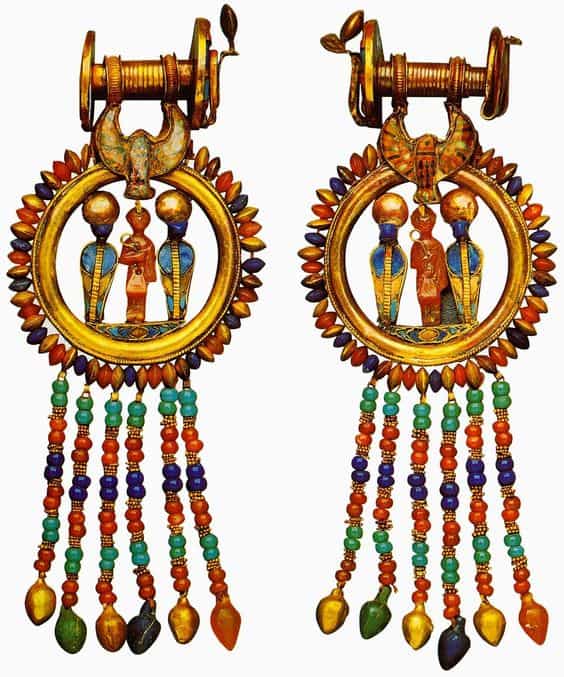


First Photo: Contemporary piece inspired by jewelry from ancient Egypt designed by Doro Soucy