How did the ancient Egyptians transport the enormous stone blocks used to build the Pyramids of Giza?
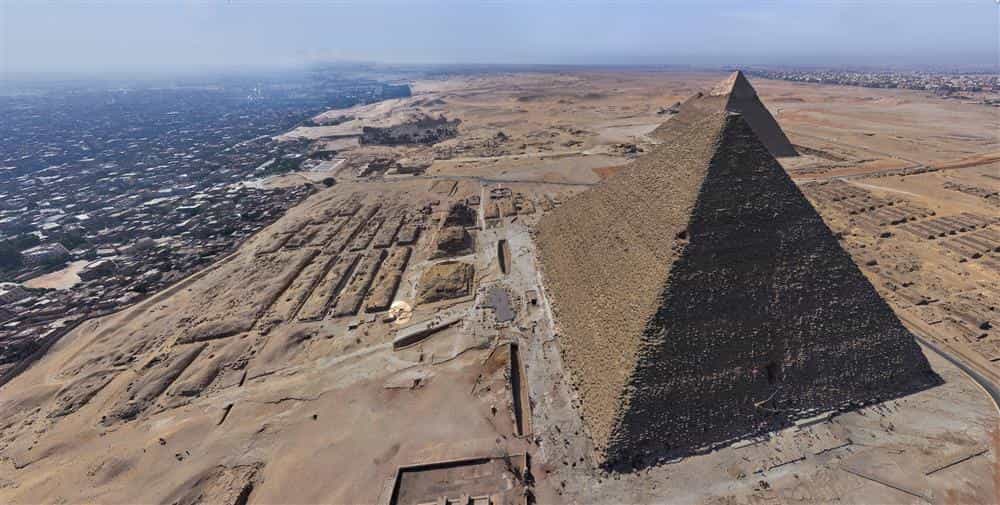
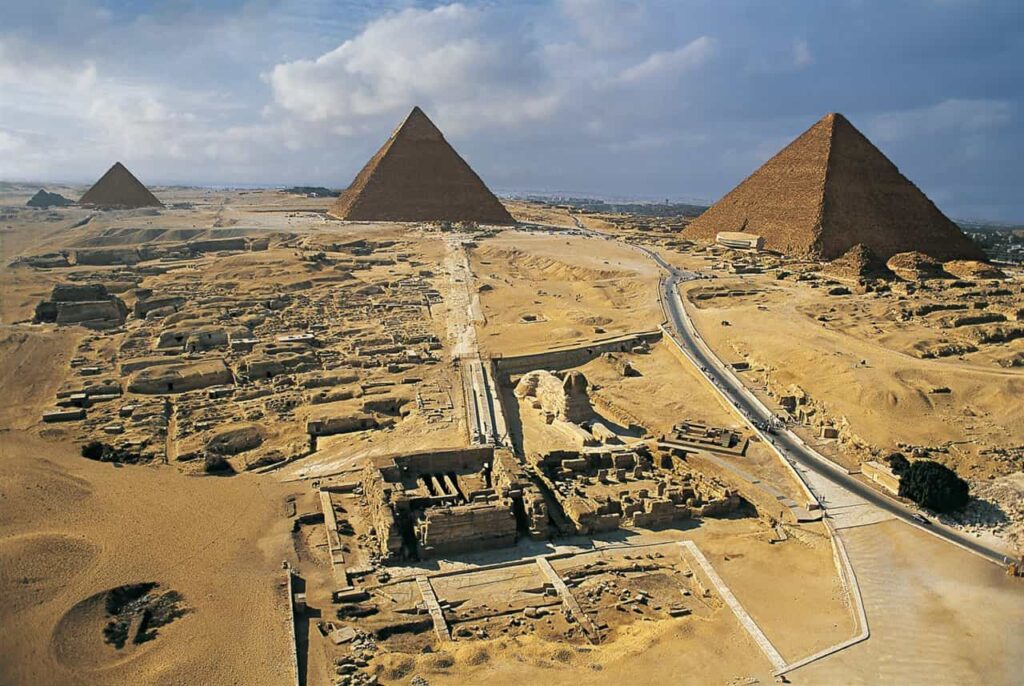
A study published in the Proceedings of the National Academy of Sciences used pollen analysis to reconstruct the ancient landscape around Giza. The research indicates that a now-disappeared branch of the Nile, often referred to as the Khufu Branch, once flowed much closer to the Giza plateau than the river does today.
Its presence would have been crucial for transporting heavy building materials by boat, providing a navigable waterway close to the pyramid construction sites.
The existence of this ancient Nile branch had been recognized for decades, but the study aimed to determine how its water levels changed over roughly the last 8,000 years. This was particularly important because the river branch would have needed to maintain sufficiently high water levels for boats carrying heavy stone blocks to reach the construction area.
The Nile’s channels and branches have shifted considerably over thousands of years. By analyzing pollen preserved in ancient sediments, researchers reconstructed the environment around Giza during the mid-third millennium B.C., when the pyramids of the Fourth Dynasty were built.
Their findings suggest that the Khufu Branch remained sufficiently active during the Fourth Dynasty to support the transportation of construction materials for the pyramids of Khufu, Khafre, and Menkaure.
The findings are consistent with other evidence for waterborne transport, including ancient papyri describing the movement of limestone by boat.
As lead author Hader Shisha explained, building the pyramids would have been extremely difficult without the Khufu Branch having a sufficiently high water level to allow boats carrying heavy stone blocks to reach the site.
Could this lost Nile channel be one of the keys to understanding how the ancient Egyptians built the Pyramids of Giza?