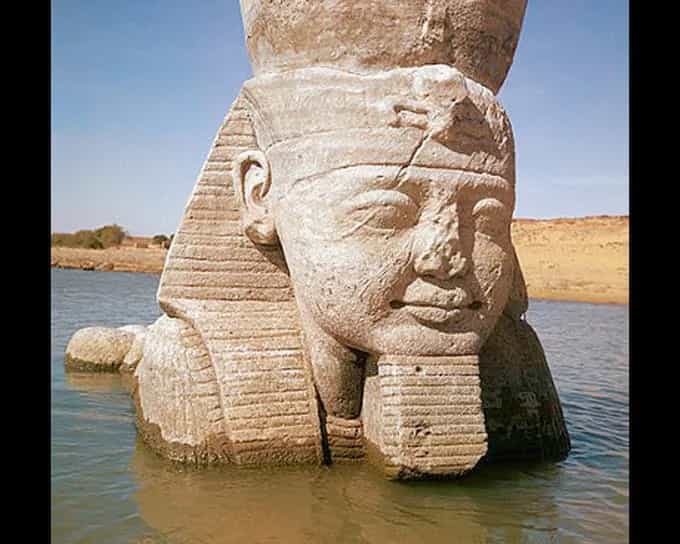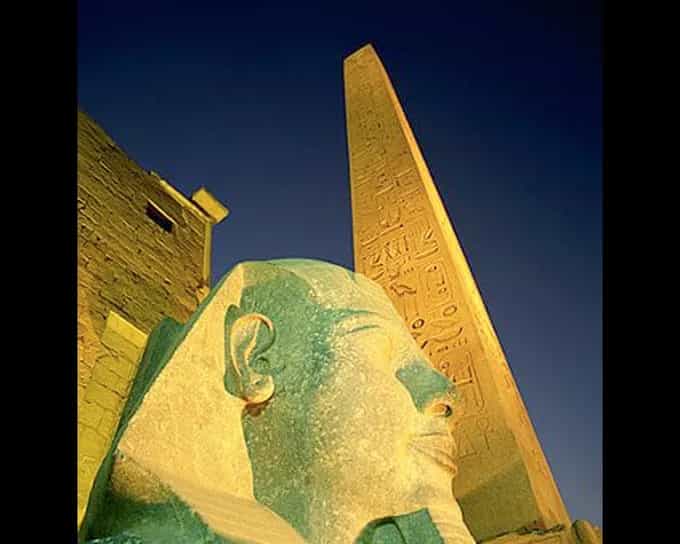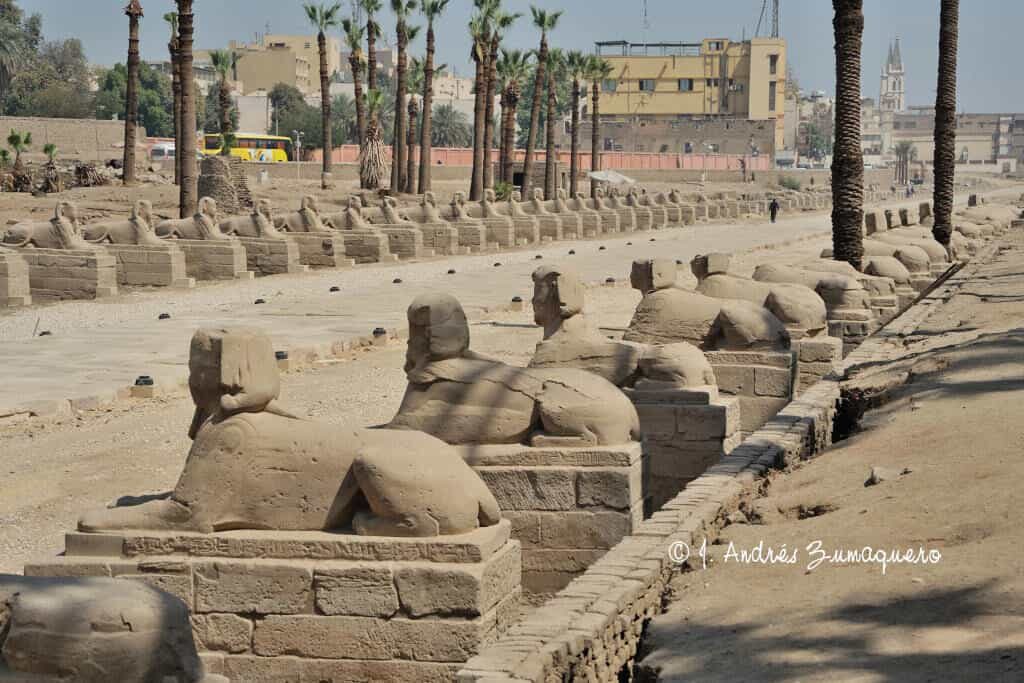
Sphinxes were among the most distinctive creatures in ancient Egyptian art. Usually depicted with the body of a lion and the head of a human, they combined the strength and ferocity of the lion with the power and authority of the king.
But what was the purpose of the sphinxes in ancient Egypt?
Sphinxes served several important religious and royal functions. They could act as protective guardians of temples and sacred spaces, symbolize royal power and divine kingship, and appear in processional avenues leading to temples. The lion’s body conveyed strength and protection, while the human or divine head connected the creature with kingship or a particular deity.
Etymology
The word sphinx comes from the Greek Sphinx, but the ancient Egyptians had their own terms for these figures. One important Egyptian expression was shesep-ankh, meaning “living image.”
The Greek term became the familiar word “sphinx” used today.
History and Symbolism
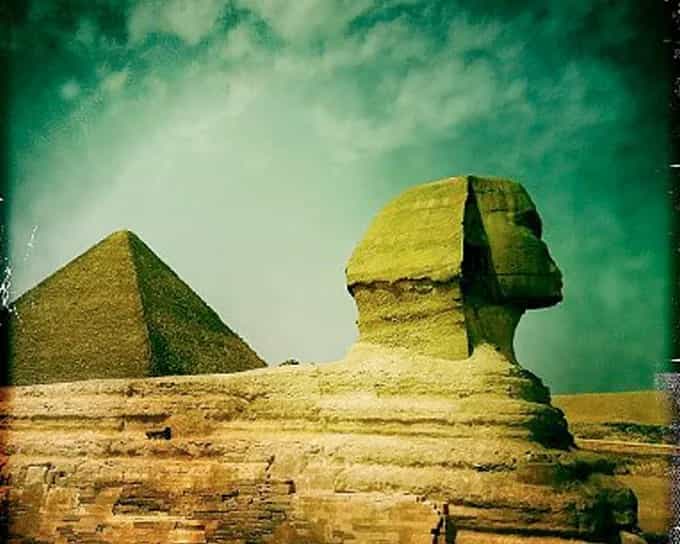
Sphinxes appear in Egyptian art from the Fourth Dynasty of the Old Kingdom, making the form more than 4,500 years old. The most famous example is the Great Sphinx at Giza, which represents the Fourth Dynasty king Khafre.
The sphinx combined the power of the lion with the identity and authority of the king. Lions had long been associated with kingship, strength, and divine protection. As a result, the sphinx became a powerful image of royal authority and protection.
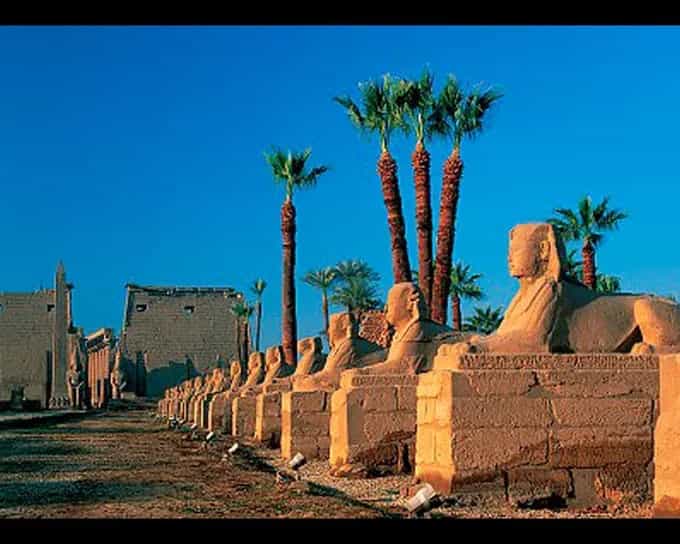
Many sphinxes were placed around temples and sacred spaces. They could stand at entrances or line processional routes, symbolically guarding the sacred area.
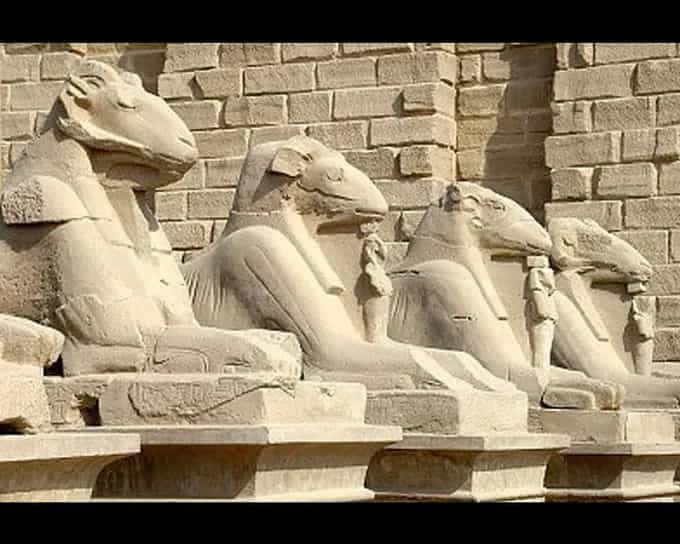
Sphinxes were not always human-headed. Their heads could also represent rams or other sacred beings, particularly when the figure was associated with a deity.
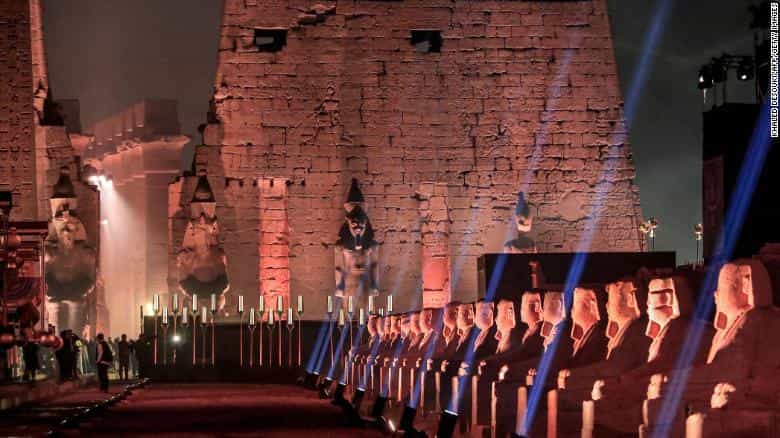
During the New Kingdom, for example, ram-headed sphinxes became particularly prominent in the religious landscape of Thebes, where the ram was closely associated with the god Amun.
The Great Sphinx of Giza
The Great Sphinx of Giza is one of the oldest and most famous monumental sculptures in ancient Egypt.
Carved from the natural limestone bedrock at Giza during the Fourth Dynasty, it has the body of a lion and the head of a king wearing the nemes headdress. It is generally identified as a representation of King Khafre, whose pyramid stands nearby.
The ancient Egyptians later associated the monument with the sun god, and its name is commonly rendered as Hor-em-akhet, meaning “Horus in the Horizon.”
Sphinxes Along the Nile
Some Egyptian sphinxes were associated with temples and processional routes. Their placement was not simply decorative: these imposing sculptures helped define and protect sacred spaces.
A famous example is the processional avenue connecting Karnak Temple and Luxor Temple at ancient Thebes. The avenue extends for approximately 2.7 kilometers and was lined with numerous sphinxes and statues.
The surviving sphinxes include ram-headed figures, reflecting the importance of Amun in the religious traditions of Thebes.
Ram-Headed Sphinxes
Although the classic Egyptian sphinx has a human head, ancient Egyptian artists created different forms of the creature.
Ram-headed sphinxes were particularly associated with Amun, whose sacred animal was the ram. These figures could therefore combine the protective power of the sphinx with the divine identity of Amun.
The Met notes that Egyptian sphinxes could combine the lion’s body with the heads of other animals, including rams and falcons, when representing deities.
Symbols of Royal Power
The sphinx was closely connected with Egyptian kingship.
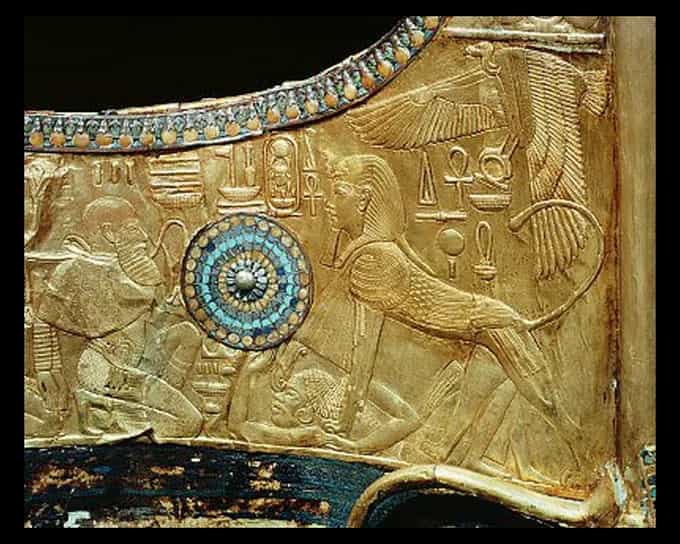
A king could be represented as a sphinx, emphasizing his ability to defend Egypt and defeat his enemies. In some reliefs and objects, the king appears in sphinx form trampling or overpowering enemies.
This imagery communicated an important message: the pharaoh possessed the strength of the lion and the authority to protect Egypt.
Sphinxes could also represent female rulers. For example, the Metropolitan Museum of Art preserves sphinxes depicting Hatshepsut with the body of a lion and the head of the female king. At least six granite sphinxes once stood in her mortuary temple at Deir el-Bahri.
Sphinxes as Guardians
One of the most important purposes of sphinxes was protection.
They were frequently placed around temples and sacred spaces, sometimes in pairs at entrances and sometimes in long rows along processional avenues. Their imposing lion bodies symbolically communicated strength and their readiness to defend the sacred realm.
Rather than thinking of them simply as statues of mythical creatures, it is better to understand Egyptian sphinxes as powerful images of royal authority, divine protection, and sacred guardianship.
The Alabaster Sphinx
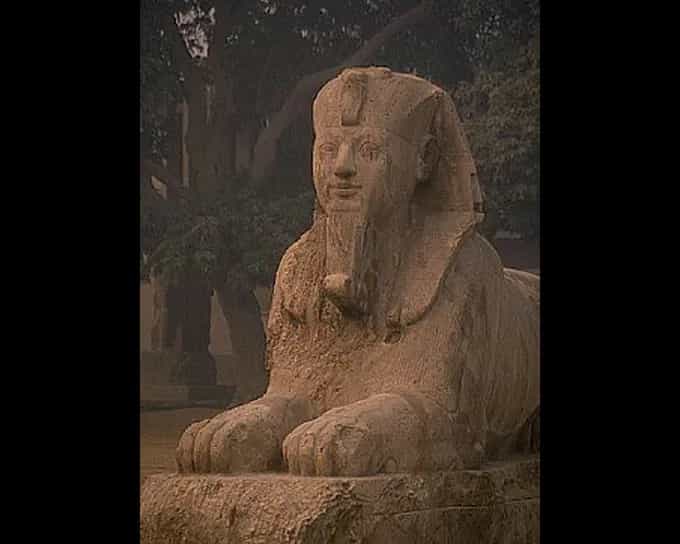
The name “Alabaster Sphinx” is used for a famous sphinx sculpture discovered at Memphis. Its identification and dating have been debated, and its attribution should therefore be presented cautiously.
As with many Egyptian monuments, damage and the loss of inscriptions can make the original identity and date difficult to establish with certainty.
Why Did Ancient Egyptians Build Sphinxes?
The purpose of a sphinx depended on its location, form, and identity, but several themes appear repeatedly:
- Protection: Sphinxes could guard temples and sacred spaces.
- Royal power: The lion’s strength reinforced the authority of the pharaoh.
- Divine kingship: The human or divine head connected the lion’s power with a ruler or deity.
- Religious symbolism: Sphinxes could be associated with gods such as Amun.
- Processional symbolism: Rows of sphinxes marked important routes between sacred places.
The sphinx was therefore much more than a decorative sculpture. It was a visual statement of strength, protection, kingship, and divine power—one that remained important in Egyptian art for thousands of years.