Who was the man behind this unusual ancient Egyptian mummy at the Louvre?
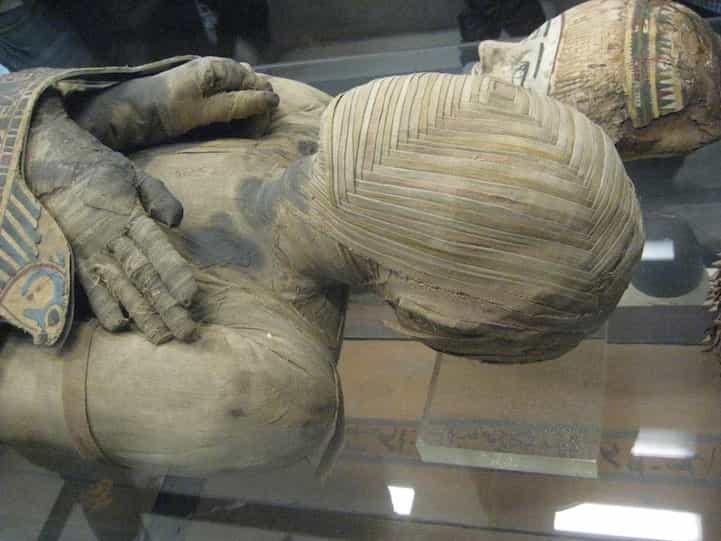
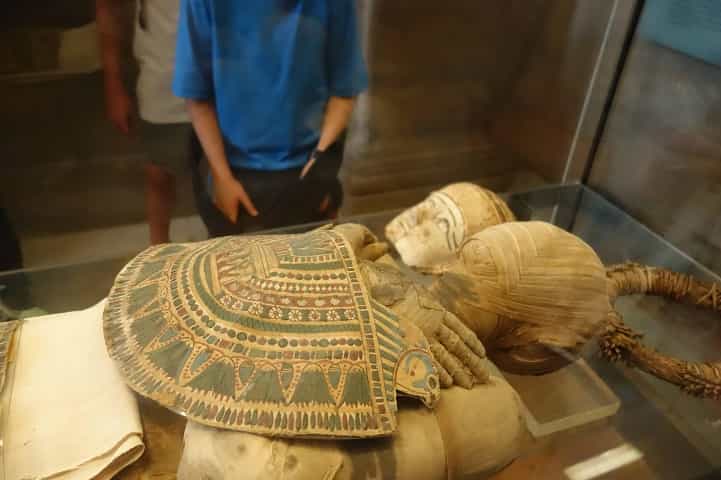
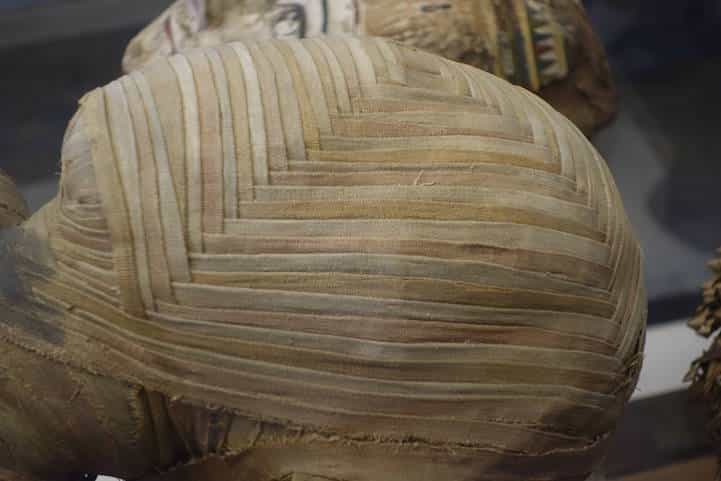
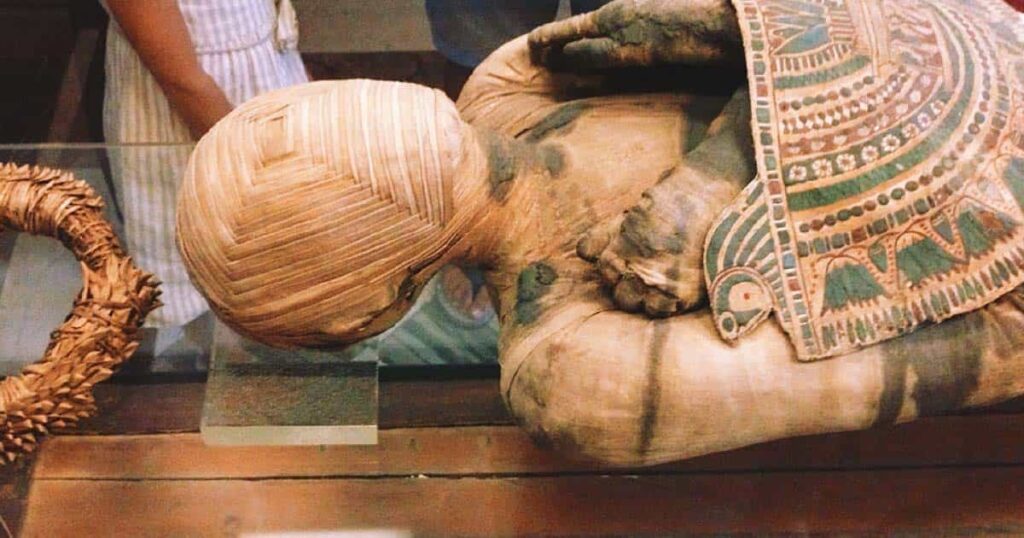
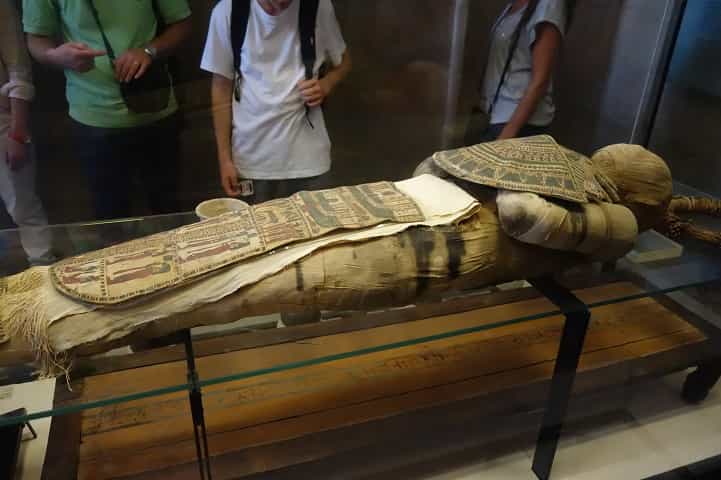
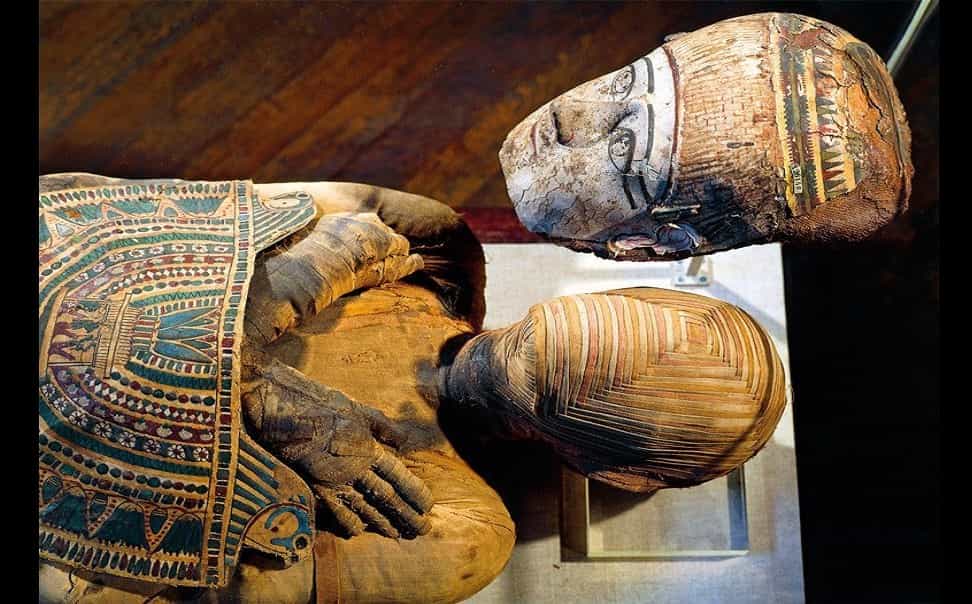
One ancient Egyptian mummy at the Louvre Museum has attracted attention because of its remarkably unusual wrapping. Unlike mummies covered in conventional layers of linen bandages, this mummy features an intricate, interwoven square pattern across the face, while the rest of the body is covered with elaborate cartonnage.
The distinctive pattern on the face is made from interwoven strips of linen. Beneath the wrappings, the man’s body is remarkably well preserved. According to the Louvre, X-rays revealed that he was an adult male who lived during the Ptolemaic Period (305–30 BC).
His identity remains uncertain. Museum researchers have suggested that his name may have been Pachery or Nenu, although neither identification can be considered certain.
The mummy is covered with elaborate cartonnage featuring broad shoulders, a neckband extending across the chest, an ornamental apron over the legs, and a casing around the feet.
Cartonnage was a funerary material made from layers of linen or papyrus covered with plaster or gesso. It was then molded and painted, and was commonly used to create mummy coverings, masks, and other funerary elements.
The man’s internal organs were also treated as part of the mummification process. The liver, lungs, stomach, and intestines were commonly removed and preserved separately, often in canopic jars. The heart, however, was usually left inside the body because ancient Egyptians regarded it as the center of thought, emotion, and personal identity. It played an important role in the judgment of the deceased in the afterlife.
The brain was generally removed during mummification, often through the nose, and was not preserved in the same way as the other major organs.
The elaborate wrapping and cartonnage covering of this mummy provide a fascinating glimpse into ancient Egyptian funerary traditions during the Ptolemaic Period. More than simply preserving the body, mummification was part of a complex set of beliefs about death, rebirth, and existence in the afterlife.
Yet one mystery remains: who was the man behind the mask?