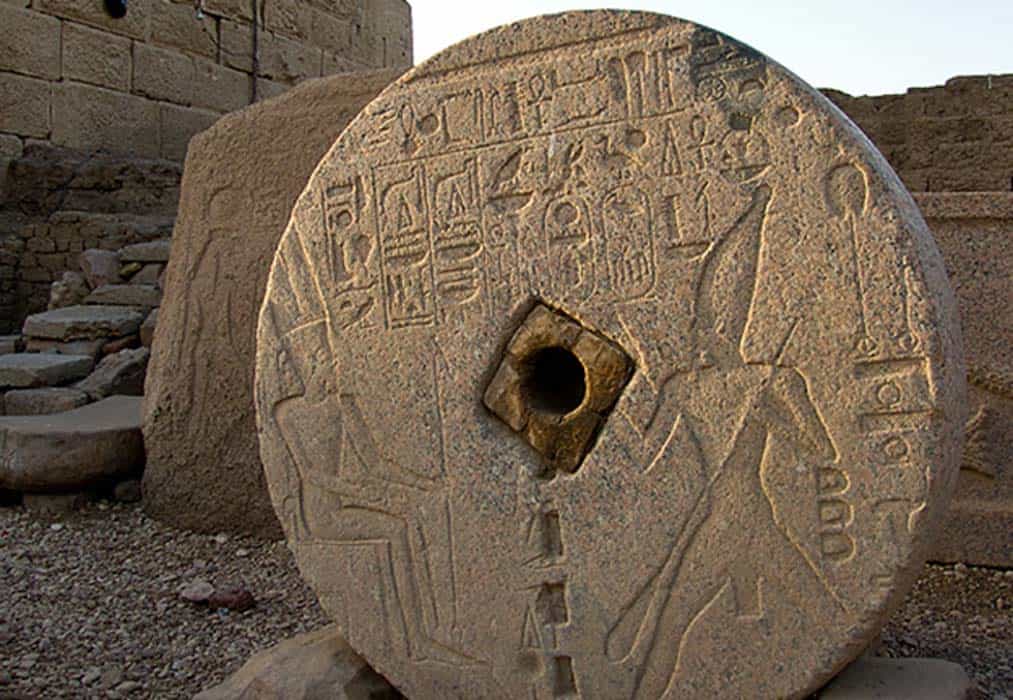
How did the ancient Egyptians drill through granite using the tools available thousands of years ago? This question has fascinated archaeologists, engineers, and history enthusiasts for generations.
From massive granite sarcophagi to intricately carved statues and temple monuments, ancient Egyptian craftsmanship demonstrates an extraordinary ability to work with some of the hardest stones available in the ancient world.
These achievements sometimes inspire speculation about lost technologies or even extraterrestrial assistance. However, archaeological evidence and experimental studies offer compelling explanations for how ancient Egyptian artisans accomplished these remarkable feats.
So, how did they drill through granite? What tools did they use, and how did they shape such a hard stone without modern machinery?
Why Was Granite So Difficult to Work?
Granite is an extremely hard igneous rock composed primarily of minerals such as quartz and feldspar. Unlike limestone, which is relatively easy to carve, granite requires more demanding techniques to cut, shape, and polish.
Nevertheless, ancient Egyptian craftsmen worked with granite for centuries, producing monumental architecture, statues, sarcophagi, and other objects that survive to this day.
Their success did not depend on a single tool or technique. Instead, they combined different methods, including percussion, abrasion, drilling, and grinding, depending on the type of stone and the desired result.
What Tools Did Ancient Egyptians Use to Work Granite?
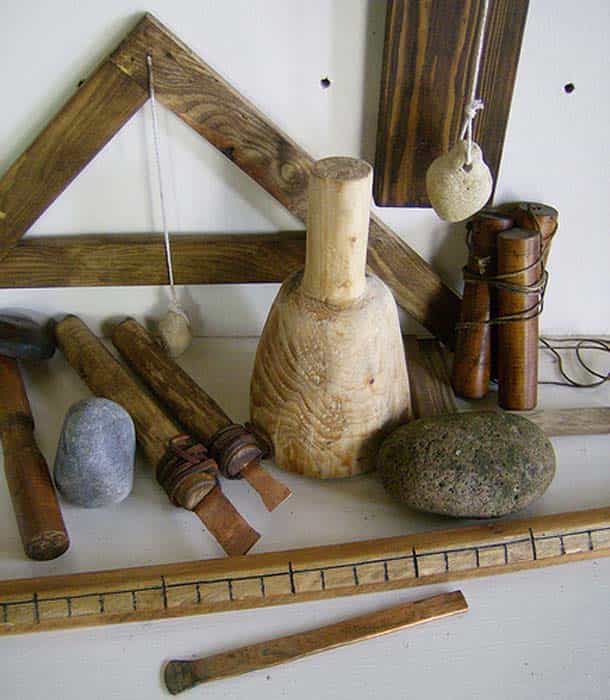
Archaeological evidence indicates that ancient Egyptian artisans used a combination of stone tools, copper implements, and abrasive materials.
- Stone Pounders and Hammers
One of the most important tools for working hard stone was the stone pounder. These heavy tools were often made from tough rocks, including dolerite.
Workers repeatedly struck granite surfaces with pounders to remove small fragments of stone and gradually shape the material. Although this process required considerable effort, it was effective for rough shaping and quarrying.
- Copper Saws and Drills
Copper tools played an important role in ancient Egyptian stoneworking. Archaeological evidence, including drill holes and cut marks, indicates that metal tools were used to saw and drill stone.
However, copper alone was not hard enough to cut efficiently through granite. The process also relied on abrasive materials that helped wear away the rock.
- Abrasive Sand and Other Minerals
Abrasive materials were essential to working hard stone. When particles harder than the material being worked are pressed and moved against its surface, they gradually grind it away.
Fine quartz-rich sand is one material associated with ancient Egyptian stoneworking. Archaeological research has also investigated evidence for harder abrasives, including corundum, in certain contexts.
This combination of tools and abrasives helps explain how craftsmen could cut, drill, and shape granite without modern steel machinery.
How Did Ancient Egyptians Drill Through Granite?
One widely discussed technique involved a tubular drill made from copper or copper alloy, used with abrasive material.
Rather than relying on the metal alone to cut the stone, the drill worked with abrasive particles that gradually ground away the granite.
The process likely involved several steps:
- Positioning the drill: A tubular drill was placed against the granite surface where a hole was required.
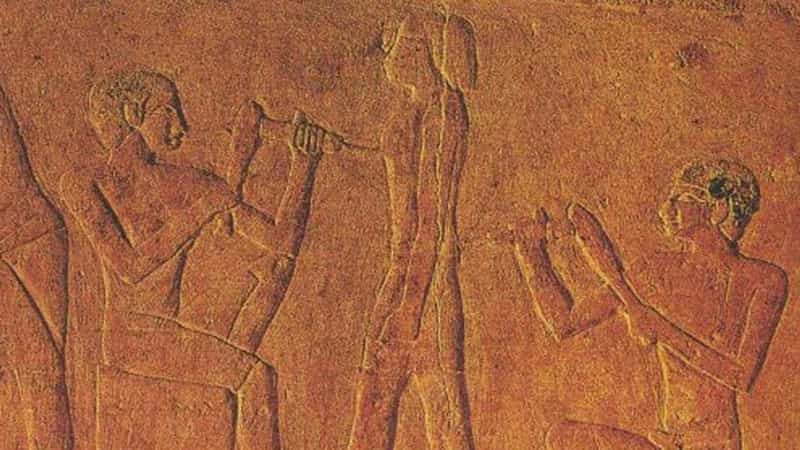
- Applying pressure and rotation: Workers rotated the drill using a suitable mechanism, potentially including a bow-driven arrangement, while maintaining pressure.
- Using abrasives: Abrasive particles worked between the drill and the stone, gradually wearing away the granite.
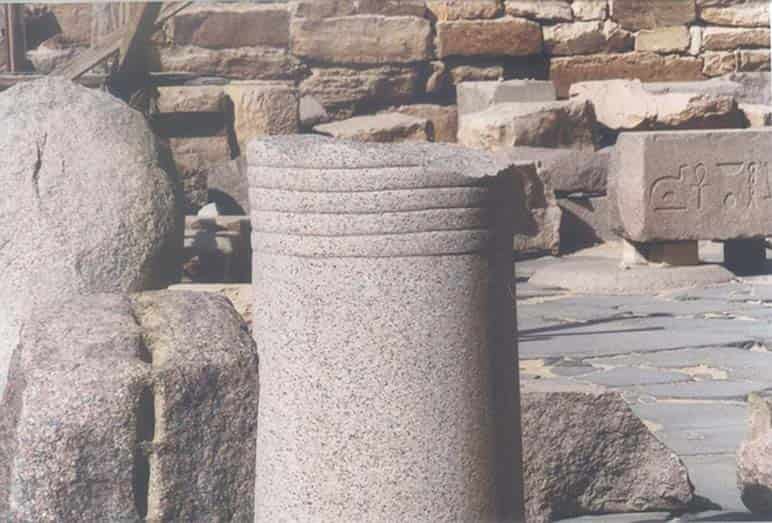
- Removing the stone core: As the drill penetrated the surface, a cylindrical core could remain inside the tube. This core could then be removed as the drilling continued.
Evidence for ancient drilling includes cylindrical holes and stone cores. Experimental archaeology has also tested different combinations of tools and abrasives to investigate how these marks could have been produced.
The precise details may have varied according to the period, the stone being worked, and the object being manufactured.
How Did They Cut and Split Large Granite Blocks?
Drilling was only one part of ancient Egyptian stoneworking. Extracting large blocks from bedrock required different techniques.
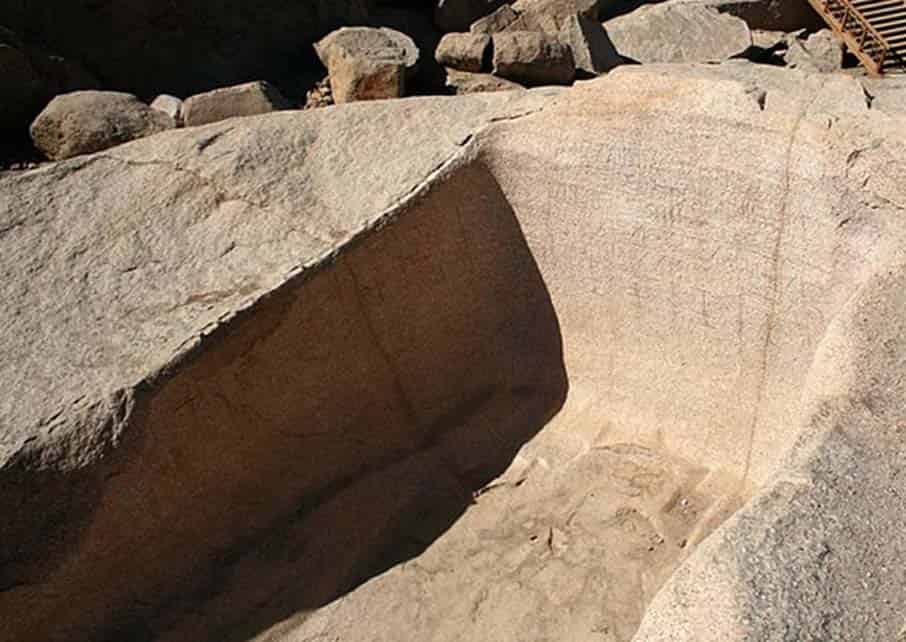
Quarry workers used stone pounders to create trenches and undercuts around sections of hard rock. These labor-intensive methods helped them detach blocks from the surrounding bedrock.
Wooden wedges were another method of splitting stone. When inserted into prepared openings and soaked with water, the wood could expand and exert pressure on the surrounding rock. Repeated applications could help widen a crack and separate sections of stone under suitable conditions.
However, this wedge technique should not be confused with granite drilling. It was a method of splitting stone, whereas drilling required a different process involving tools and abrasion.
How Long Did It Take to Work Granite?
The time required depended on the size of the object, the depth of the hole, the desired finish, and the technique employed.
Drilling a small hole in a stone vessel was a very different task from cutting a large granite block or shaping a monumental sarcophagus.
Ancient Egyptian craftsmen also had to maintain their tools, replenish abrasive materials, and repeatedly work the stone to achieve the required dimensions and finish.
Although the process could be slow and labor-intensive, the Egyptians possessed generations of practical experience and specialized knowledge that made sophisticated stoneworking possible.
Did Ancient Egyptians Possess Lost Technology?
Despite the archaeological evidence for stone pounders, metal tools, and abrasive techniques, questions about the precision of certain ancient Egyptian stone objects continue to attract attention.
Christopher Dunn, an engineer known for his interest in ancient Egyptian technology, has questioned whether conventional explanations fully account for some observed tool marks and the precision of particular stone objects.
His arguments have contributed to wider discussions about ancient manufacturing techniques. However, claims that the Egyptians must have possessed advanced, unknown machinery are not established simply by the existence of finely worked granite.
Archaeologists investigate such questions by examining tool marks, studying surviving artifacts, analyzing materials, and conducting controlled experiments. These methods help distinguish plausible explanations supported by evidence from hypotheses that remain unproven.
What Does Archaeology Tell Us About Ancient Egyptian Stoneworking?
Research into ancient Egyptian stoneworking shows that sophisticated results do not necessarily require modern machinery.
The combination of hard stone pounders, copper or copper-alloy tools, abrasive materials, and skilled manual labor provides a well-supported framework for understanding many ancient Egyptian techniques.
Researchers continue to investigate the precise composition of abrasives and the methods used to produce particular objects. Some technical details remain debated, and new discoveries may refine our understanding.
Nevertheless, the archaeological evidence reveals a remarkable level of practical knowledge, experimentation, and craftsmanship.
Rather than assuming that ancient Egyptians possessed mysterious technology, we can appreciate their achievements by examining the tools, materials, and techniques they actually used.
Their ability to transform one of the hardest commonly used building stones into precisely shaped objects remains a testament to the ingenuity and skill of ancient Egyptian artisans.