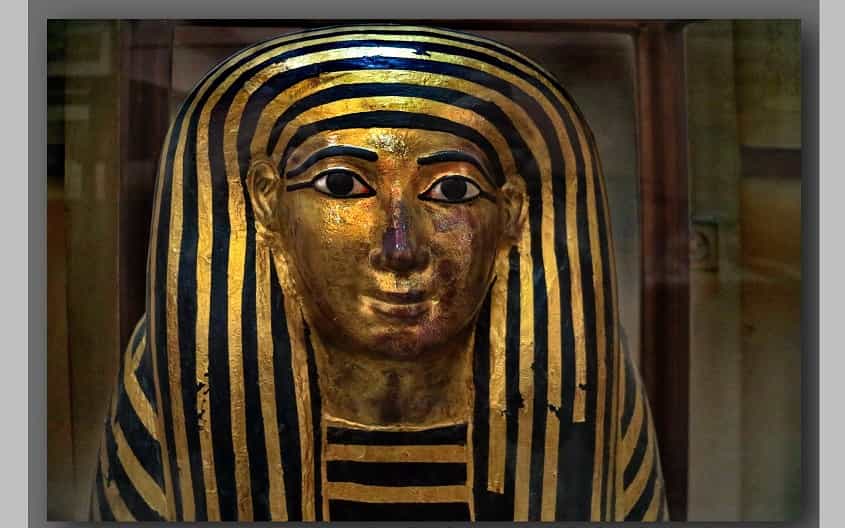
Maiherpri lived around 1450 BC during Egypt’s Eighteenth Dynasty in the New Kingdom.
It is not known exactly under which pharaoh he served. A piece of linen bearing the name of Queen Hatshepsut, found in his tomb, provides the only firm chronological clue. However, scholars have also suggested that he may have lived during the reigns of Thutmose III, Amenhotep II, or Thutmose IV. Many historians favor an association with the court of Thutmose IV.
Maiherpri’s name is usually translated as “Lion of the Battlefield” or “The Lion on the Battlefield.” Together with the discovery of a bow and arrows in his tomb, it suggests that he may have served as a military official or warrior. His burial in the Valley of the Kings, along with the richness of his grave goods, indicates that he enjoyed exceptional royal favor.
His tomb, KV36, was discovered in 1899 by the French Egyptologist Victor Loret. Although the burial remained largely intact, evidence suggests that tomb robbers had entered it at various times in antiquity. Unfortunately, the excavation records were limited and poorly documented by modern standards, making it difficult to reconstruct the original arrangement of the objects or even determine exactly which items were found in the tomb.
The wealth and quality of the burial provide valuable insight into Maiherpri’s high social status. KV36 is located near KV13 in the Valley of the Kings. The tomb consists of a shaft leading to a small burial chamber and an antechamber. Though modest in size, it contained an impressive collection of funerary equipment.
Several inscriptions found in the tomb suggest that Maiherpri may have been raised alongside royal princes. This has led some scholars to speculate that he may have been related to the royal family or closely connected to the royal court.
His titles included “Child of the Kap” and “Fan-Bearer on the Right Side of the King,” both prestigious positions associated with the royal household. These titles indicate a close relationship with the pharaoh and may also reflect a military role.
In March 1901, Maiherpri’s mummy was examined by archaeologists. They determined that he died as a young man, probably before the age of twenty-five. No obvious injuries or signs of violence were found that could explain the cause of death.
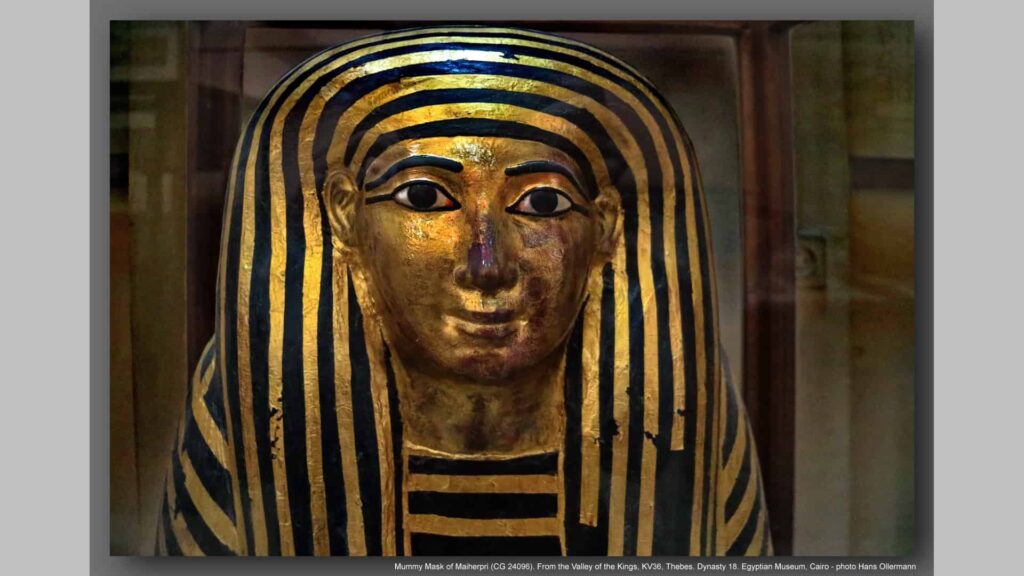
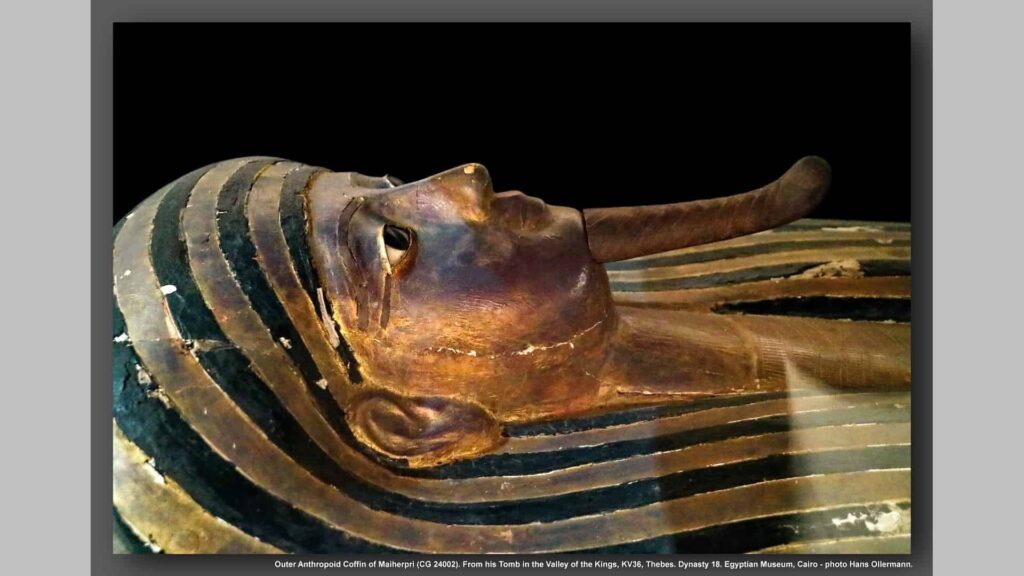
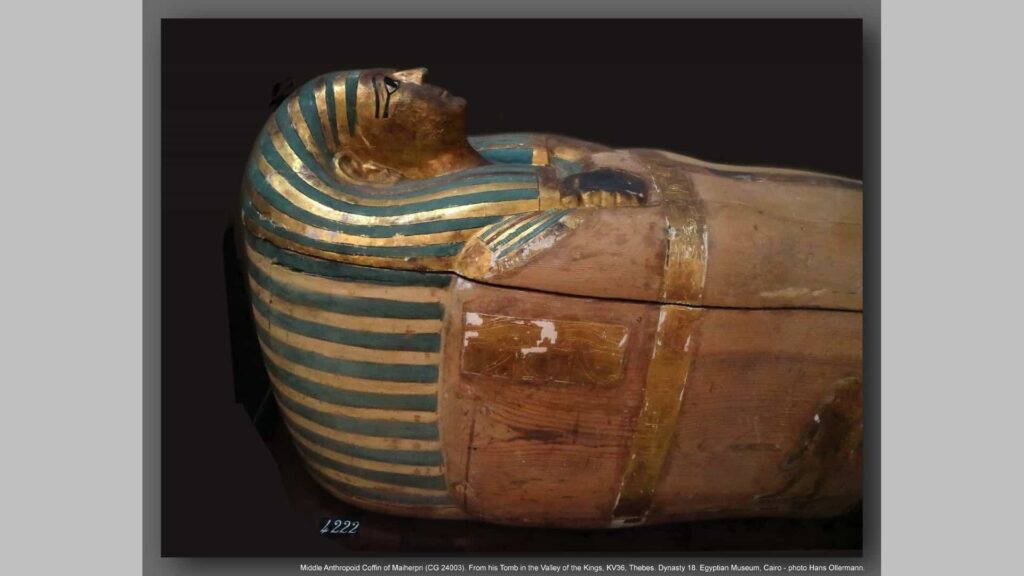
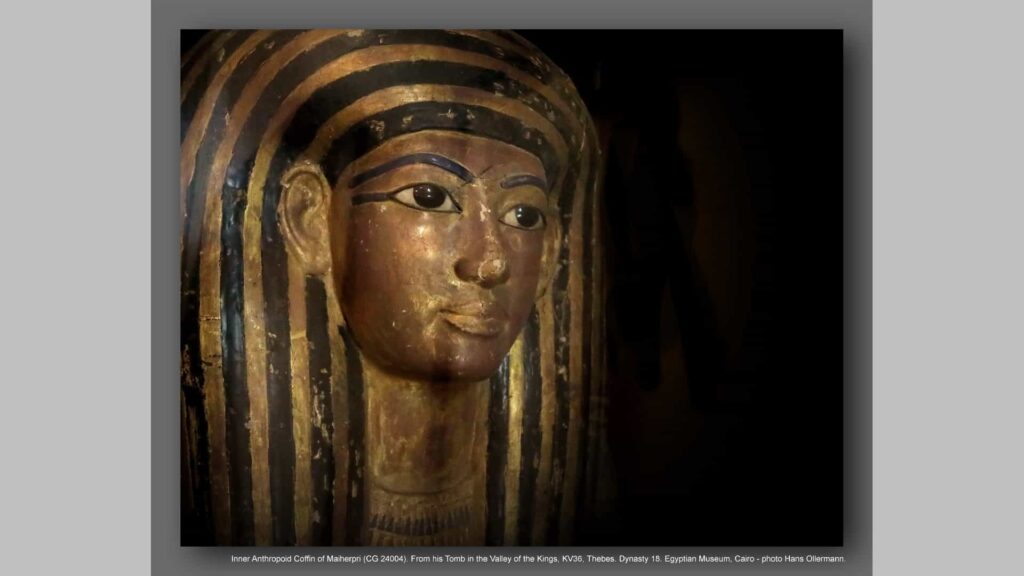
The burial equipment found within KV36 demonstrates both wealth and status. The mummy rested inside a large wooden coffin coated with black resin and decorated with gold leaf. The coffin featured representations of the Four Sons of Horus and the goddess Isis. Inside were additional anthropoid coffins, and the mummy itself was covered by a beautifully crafted funerary mask.
Among the most remarkable discoveries was a richly decorated wooden chest containing one of the finest surviving copies of the Book of the Dead. Other objects included a bow, a quiver of arrows, bracelets, a senet game, calcite canopic jars, and various items of personal equipment.
A magnificent yellow chest inscribed with Maiherpri’s name in blue lettering was discovered two years later by Howard Carter in a crevice outside the tomb. It contained garments made of fine linen.
Archaeologists also found pottery vessels, some broken by ancient tomb robbers and others still sealed, along with a plate containing traces of bread and sycamore leaves. Another intriguing object was an “Osiris bed,” a symbolic figure made of germinating grain that represented rebirth and resurrection.
Today, the objects from Maiherpri’s tomb are housed in the Egyptian Museum in Cairo and remain among the most important discoveries from a non-royal burial in the Valley of the Kings.
KV36 continues to be studied by the University of Basel’s Valley of the Kings Project, helping scholars better understand the life and status of this remarkable young courtier and warrior.