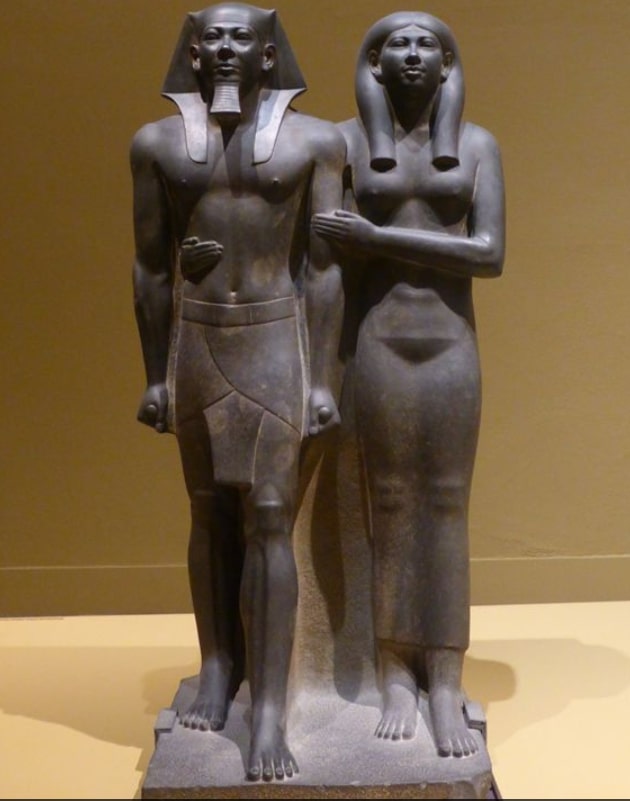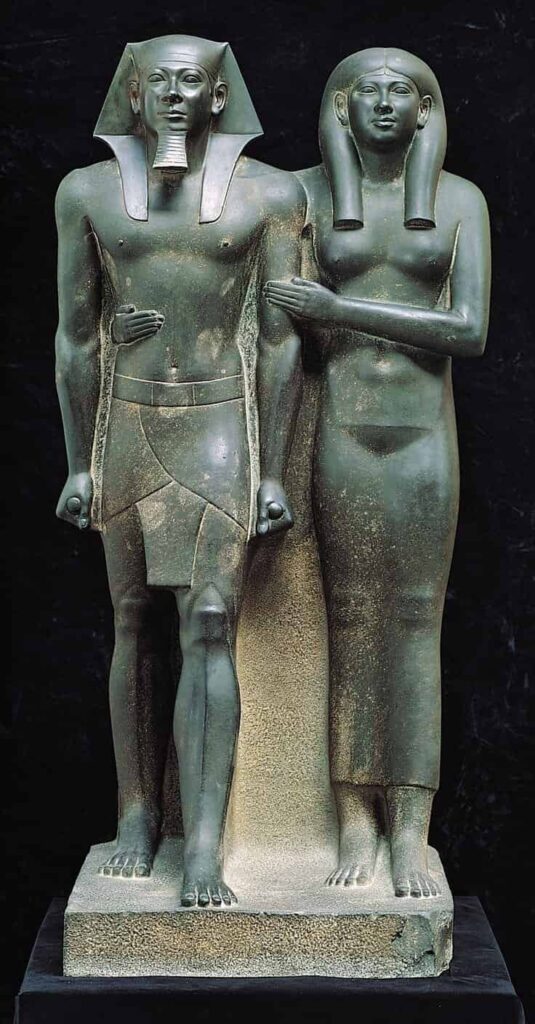
Serene beauty, royal power, and extraordinary artistic skill are rarely captured as perfectly as they are in this breathtaking, nearly life-size statue of Pharaoh Menkaure and Queen Khamerernebty II, dating to around 2490–2472 BC.
Smooth and meticulously finished, the dark stone surface reflects the artistic ideals of ancient Egypt and conveys a timeless sense of eternity and immortality that still resonates today.
The king and queen stand side by side, gazing into eternity. Menkaure embodies the ideal king and the perfect male form, while the queen represents the Egyptian ideal of feminine beauty and grace.
Menkaure wears the royal nemes headdress, a ceremonial false beard, and a wraparound kilt with a central tab, all symbols of his kingship. In his hands, he holds abbreviated forms of royal insignia associated with his office.
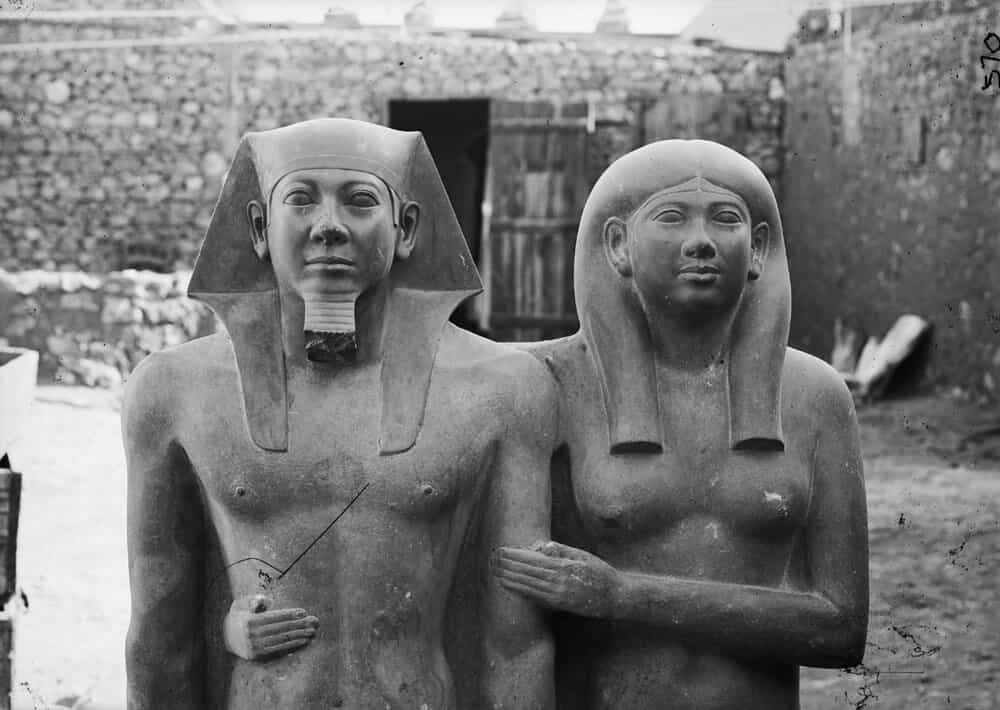
His facial features—including high cheekbones, a broad nose, slight lines running from the nose to the corners of the mouth, and a subtly protruding lower lip—are echoed in the queen’s face. However, her features are softer and fuller, emphasizing her femininity. Traces of red paint remain on the king’s face, while black paint survives on the queen’s wig.
The king’s broad shoulders, muscular limbs, and well-defined torso convey controlled strength and authority. In contrast, the queen’s narrow shoulders and slender figure, visible beneath her close-fitting sheath dress, embody the ancient Egyptian ideal of femininity.
As is typical in Egyptian sculpture, Menkaure’s left foot steps forward, although his weight remains evenly balanced. Egyptian women are usually depicted with both feet together, but in this remarkable statue, the queen’s left foot is also shown slightly advanced.
Although they share a common base and back pillar, and the queen embraces the king, the pair remain formal and reserved. Their expressions convey neither personal emotion nor interaction with the viewer, reflecting the timeless and eternal nature of Egyptian royal art.
About Menkaure
Menkaure was the sixth pharaoh of Egypt’s Fourth Dynasty during the Old Kingdom. He was the son of Khafre and the grandson of Khufu, the builders of two of the most famous pyramids at Giza.
Discovery
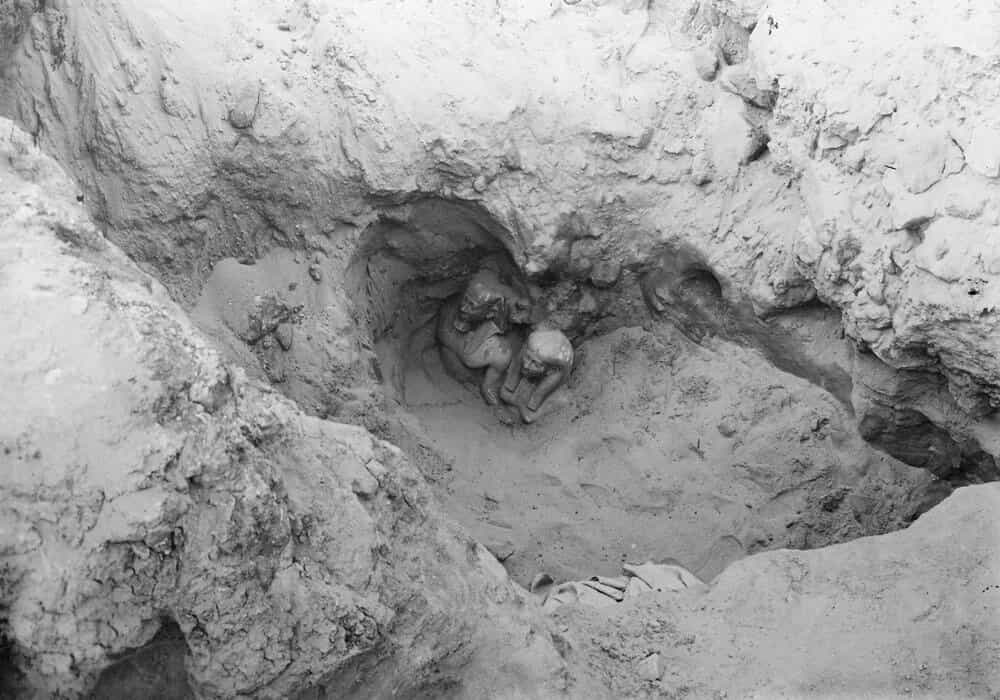
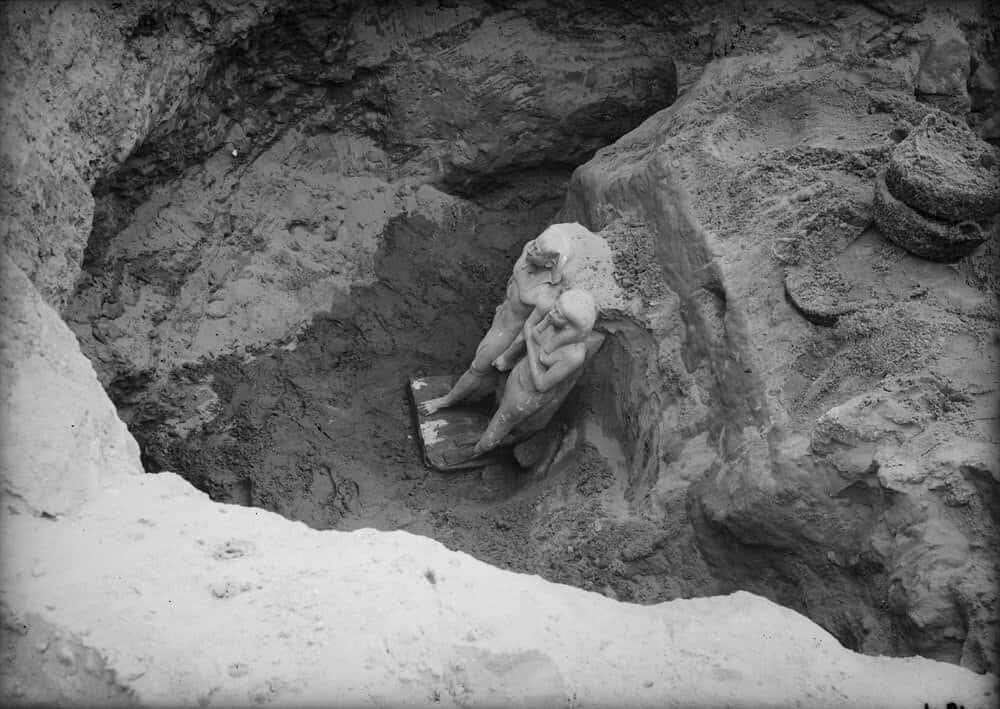
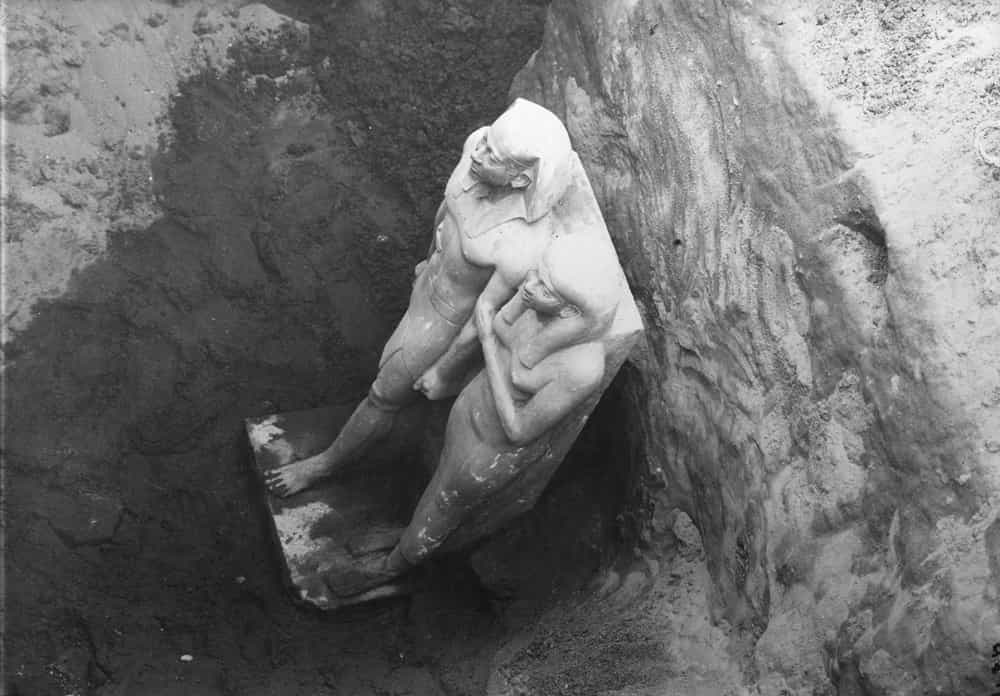
The statue was discovered on January 10, 1910, during excavations conducted by Harvard University at the Valley Temple of Menkaure’s pyramid complex on the Giza Plateau.
Today, the masterpiece is housed in the Museum of Fine Arts, Boston.
Source: Museum of Fine Arts, Boston