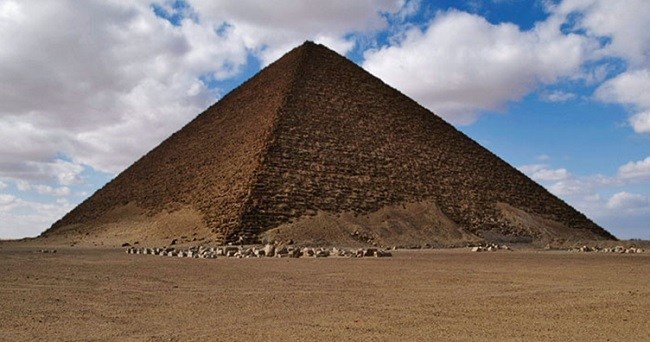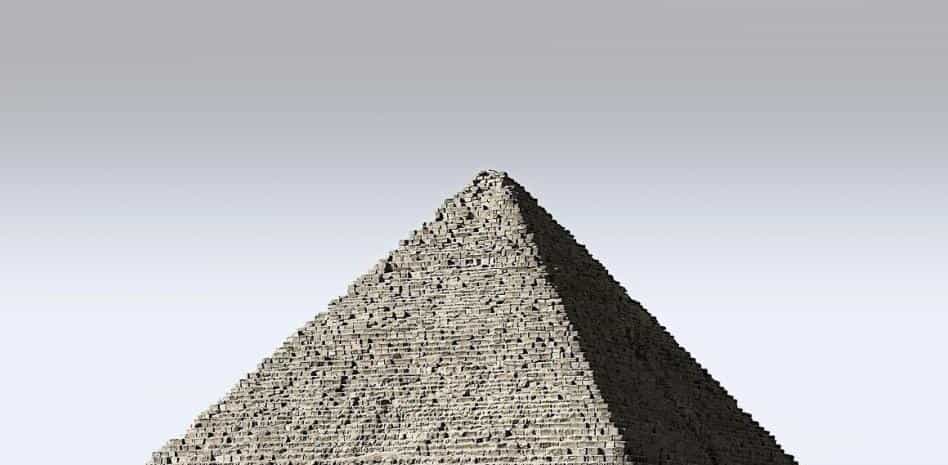
The pyramids of ancient Egypt have fascinated the world for more than 2,500 years. They have become the defining symbol of Egyptian civilization, inspiring countless theories, legends, and mysteries. Yet their distinctive shape was not chosen simply for engineering or aesthetics—it reflected profound religious beliefs about creation, kingship, resurrection, and eternal life.
To understand why the pyramids were built in their iconic form, we must look beyond their architecture and explore the beliefs that shaped ancient Egyptian civilization.
The Meaning Behind the Pyramid Shape
The pyramid was far more than a royal tomb. Every element of the pyramidal complex—from its temples and causeways to the rituals performed by priests and the organization required to build it—reflected a sophisticated religious and political system.
For the ancient Egyptians, the pyramid symbolized rebirth.
Long before the first pyramid was built, the people of the Nile observed that when the annual floodwaters receded, small mounds of fertile silt emerged from the water. These mounds became associated with the beginning of life.
This natural phenomenon inspired one of Egypt’s most important creation myths: the emergence of the primordial mound, the first land to rise from the chaotic waters at the beginning of creation. According to Egyptian belief, it was upon this mound that the sun first appeared, bringing life into existence.
Early Predynastic and Protodynastic burials already hint at this symbolism. Some tombs were covered with earthen mounds, representing the rebirth of the deceased into a new existence.
From Underground Tombs to the Sky
During Egypt’s earliest dynasties, tombs were designed primarily as underground residences for the dead. They contained everything the deceased would need in the afterlife.
By the 1st Dynasty, royal tombs combined two important ideas:
- the tomb as an eternal home
- the tomb as a place of rebirth
The burial chamber remained underground, reflecting the traditional conception of the afterlife.
A dramatic change occurred during the 3rd Dynasty.
Royal funerary beliefs evolved from an exclusively subterranean afterlife to one in which the king could ascend to the heavens and join the solar god.
This religious transformation required an entirely new architectural form.
Djoser and the Birth of the Pyramid
Around 2667–2648 BC, Pharaoh Djoser commissioned his famous funerary complex at Saqqara.
His architect was Imhotep, one of the greatest architects in history.
Imhotep initially designed a traditional mastaba, but the project evolved through several stages until it became the six-tier Step Pyramid—the first monumental stone building ever constructed.
This was not merely an engineering breakthrough.
It represented a completely new vision of the king’s destiny after death.
The Pyramid Texts, written during later dynasties, describe the pyramid as a gigantic stairway that allowed the king to ascend into the sky and join the gods.
The pyramid therefore combined two powerful symbols:
- the primordial mound where creation began
- a stairway leading the king to the heavens
The burial chamber remained underground, preserving earlier traditions, while the pyramid itself represented the king’s celestial rebirth.
Stone Architecture Changed Everything
Djoser’s complex also marked the beginning of monumental stone architecture in Egypt.
Although stone had been used earlier on a limited scale, Imhotep’s builders developed entirely new construction techniques. Early stone blocks were cut to resemble oversized mud bricks because builders were still learning how to work with the material.
Over time, Egyptian craftsmen mastered quarrying, transporting, shaping, and setting enormous limestone blocks.
Within a century, these innovations made possible the construction of the colossal pyramids of the 4th Dynasty.
The Evolution of the True Pyramid
Pharaoh Sneferu, founder of the 4th Dynasty, transformed pyramid construction.
During his reign, Egypt witnessed the construction of three major pyramids, culminating in the development of the smooth-sided, or “true,” pyramid.
His projects also established the classic layout of the royal pyramid complex:
- a Valley Temple
- a long causeway
- a Mortuary Temple
- subsidiary pyramids
- an enclosure wall
These elements became standard features of royal burials throughout the Old Kingdom.
The Great Pyramids of Giza
Sneferu’s son Khufu perfected the concept by building the Great Pyramid at Giza—the largest pyramid ever constructed.
His successor Khafre built the second-largest pyramid, while Menkaure completed the famous trio.
These pyramids consisted of carefully laid limestone blocks covered with polished white Tura limestone casing, which reflected sunlight brilliantly. In the pyramids of Khafre and Menkaure, granite was also used in the lower courses.
The gleaming white exterior would have made the pyramids visible from great distances, emphasizing both the king’s divine status and the sacred symbolism of the monument.
Changes During the 5th and 6th Dynasties
Later pyramids became smaller and were built with less durable cores made of rubble, mortar, and smaller stones. Although their interiors were less substantial, they were still covered with fine white limestone and originally appeared just as impressive.
Two major innovations appeared during the 5th Dynasty.
The first was the construction of royal solar temples, reflecting the increasing importance of the sun god Ra.
The second was the introduction of the Pyramid Texts, beginning with the pyramid of Unas, the last king of the 5th Dynasty.
These inscriptions are the oldest known religious texts in the world and were intended to guide the king safely into the afterlife.
After the Old Kingdom
Pyramids did not disappear after the Old Kingdom.
Kings of the 12th Dynasty and some rulers of the 13th Dynasty continued building pyramids, although they often used mudbrick cores with stone casings. Most of these structures have deteriorated because their limestone casing was removed in antiquity.
The final royal pyramids in Egypt were built by rulers of the 17th Dynasty at Dra’ Abu el-Naga’ near Thebes.
When the 18th Dynasty began, Egypt adopted a completely different royal burial tradition.
Kings were buried in rock-cut tombs in the Valley of the Kings rather than beneath pyramids.
Even so, the pyramid’s symbolism survived.
The valley lies beneath the pyramid-shaped peak of el-Qurn, a natural mountain that may have echoed the sacred symbolism of earlier royal pyramids by representing the king’s ascent to the heavens.
By the late 18th Dynasty, small pyramids also began appearing above the tomb chapels of non-royal officials, particularly at Deir el-Medina and Saqqara. What had once been an exclusive symbol of royal resurrection gradually became accessible to elite members of Egyptian society.
Why Were the Pyramids Built in That Shape?
The pyramids were never intended to be merely impressive monuments.
Their form embodied the ancient Egyptian vision of creation itself. They represented the primordial mound that emerged from the waters of chaos, the place where the sun first rose, and the symbolic pathway by which the king could ascend to the heavens and achieve eternal life.
For the ancient Egyptians, the pyramid was not simply a tomb.
It was a sacred machine of resurrection.