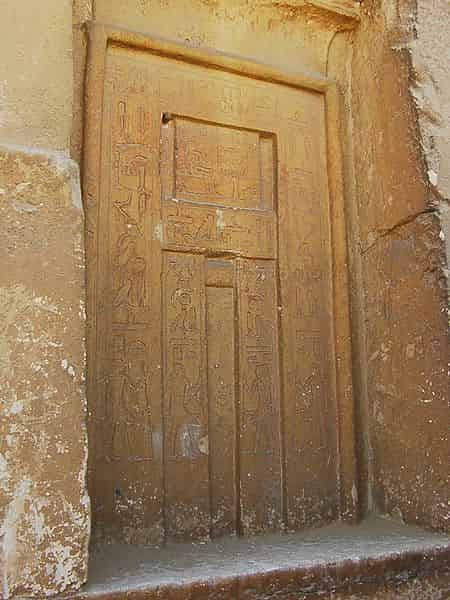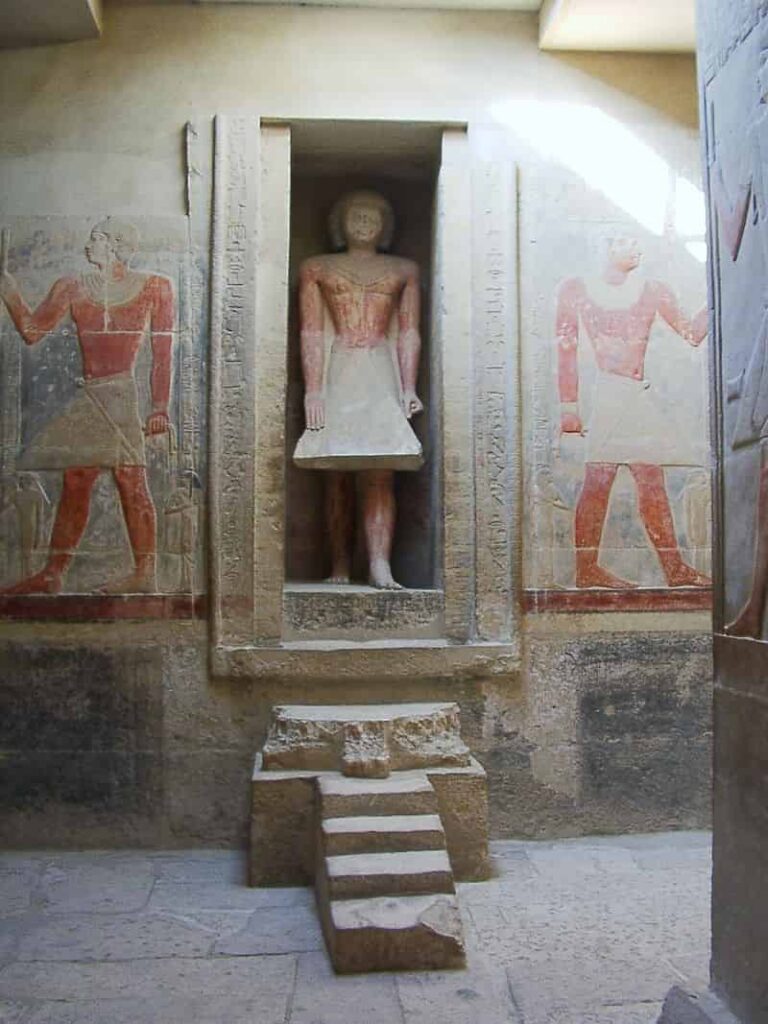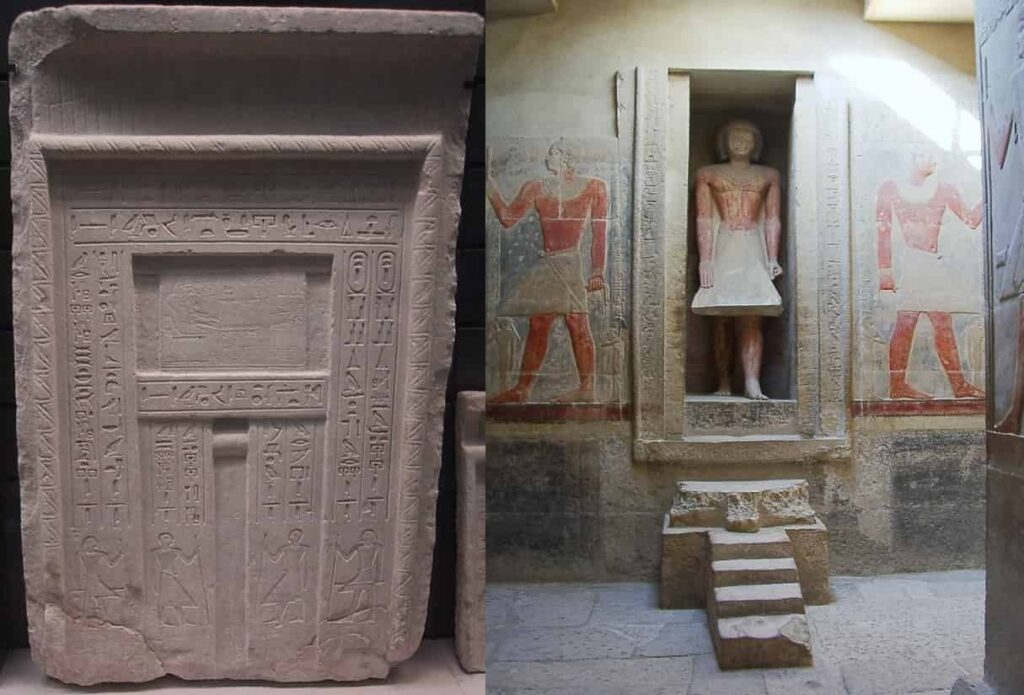
False doors are among the most fascinating features of ancient Egyptian tombs. Although they look like ordinary doorways, they were never intended to function as real entrances. Instead, they served an important religious purpose, connecting the world of the living with the realm of the dead.
For centuries, ancient Egyptians built elaborate tombs to protect the deceased and provide everything they would need in the afterlife. However, their funerary architecture was not concerned with protecting the body alone. It also reflected their beliefs about the spiritual existence of the dead.
One of the most remarkable expressions of these beliefs was the false door.
What Was the Purpose of False Doors?
False doors were symbolic doorways, usually carved into the western wall of a tomb’s offering chapel. They were designed to provide a spiritual connection between the deceased and the living world.
The ancient Egyptians believed that the deceased person’s ka, often described as their life force, could pass through the false door to receive offerings left by family members and priests.
These offerings included bread, beer, meat, and other necessities believed to sustain the deceased in the afterlife.
The false door therefore served as a symbolic threshold through which the deceased could maintain a connection with the living and continue receiving nourishment.
How Were False Doors Designed?
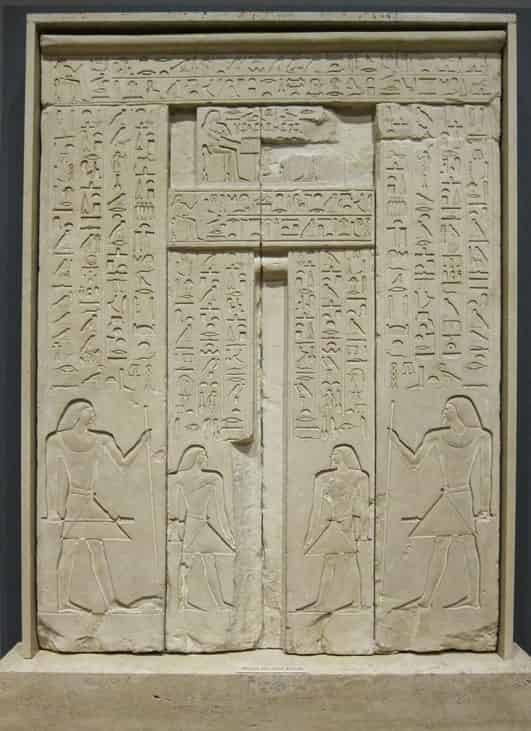
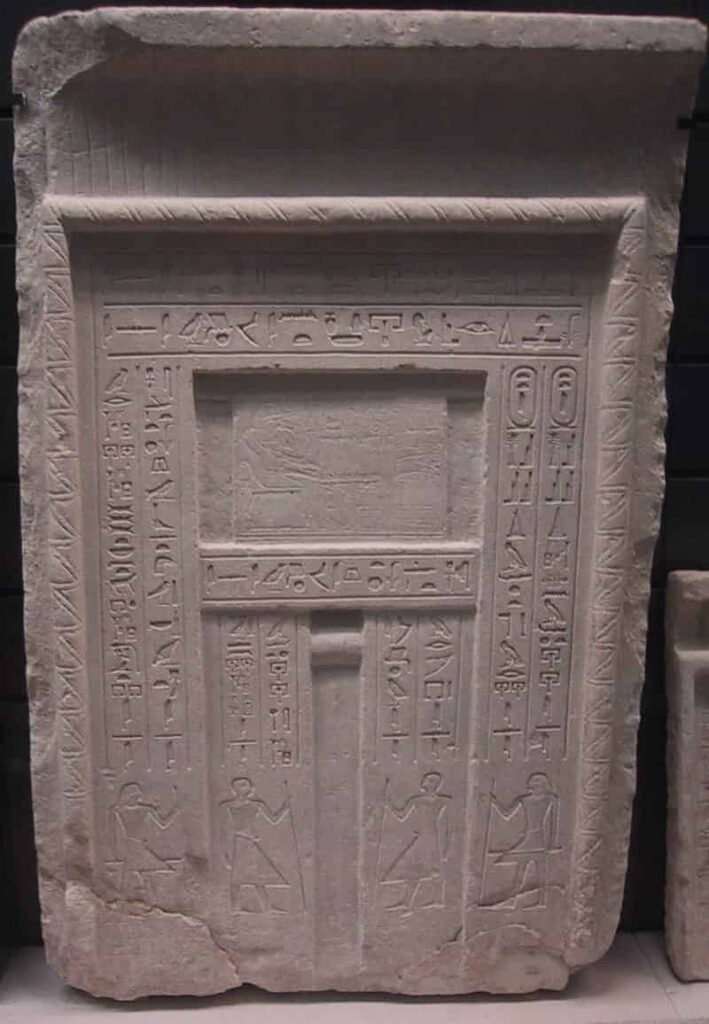
False doors were carefully designed to resemble real architectural entrances. They often featured several layers of doorframes, carved panels, inscriptions, and representations of the tomb owner.
The deceased was frequently depicted seated before an offering table, surrounded by inscriptions identifying their name and titles and listing the offerings they would receive.
These details were not merely decorative. They had religious significance, helping ensure that the deceased would continue to receive offerings and remain connected to the world of the living.
Could the Ancient Egyptians Communicate Through False Doors?
The relationship between the living and the dead was an important part of ancient Egyptian religious beliefs.
Family members visited tombs to perform rituals, recite prayers, and leave offerings for their deceased relatives. The false door provided a symbolic focal point for these practices.
Ancient Egyptians also left letters to the dead, asking deceased relatives for assistance with personal problems, family disputes, and other difficulties. These letters demonstrate how strongly they believed that the dead could remain involved in the lives of the living.
False doors were therefore much more than architectural decorations. They represented a connection between two worlds and reflected the ancient Egyptians’ enduring belief in life after death.