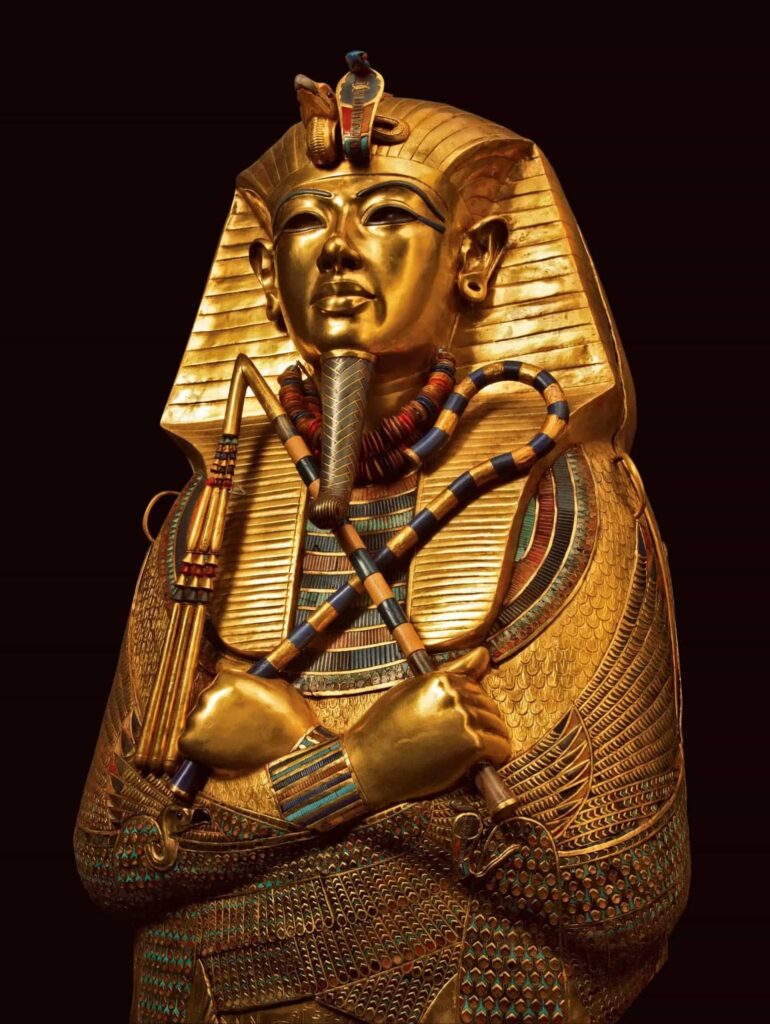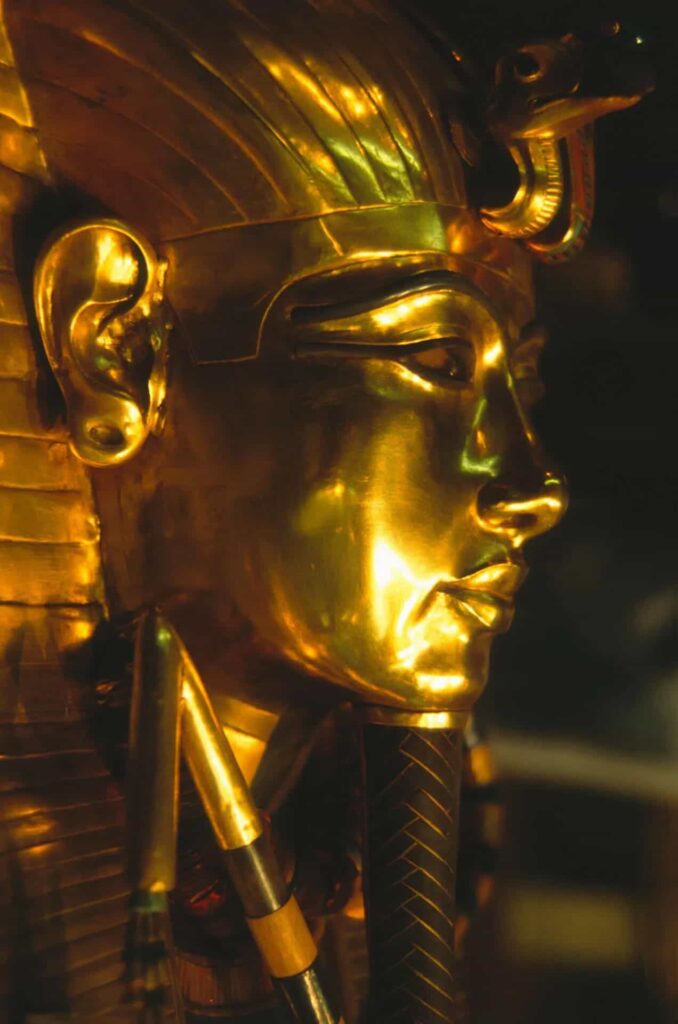
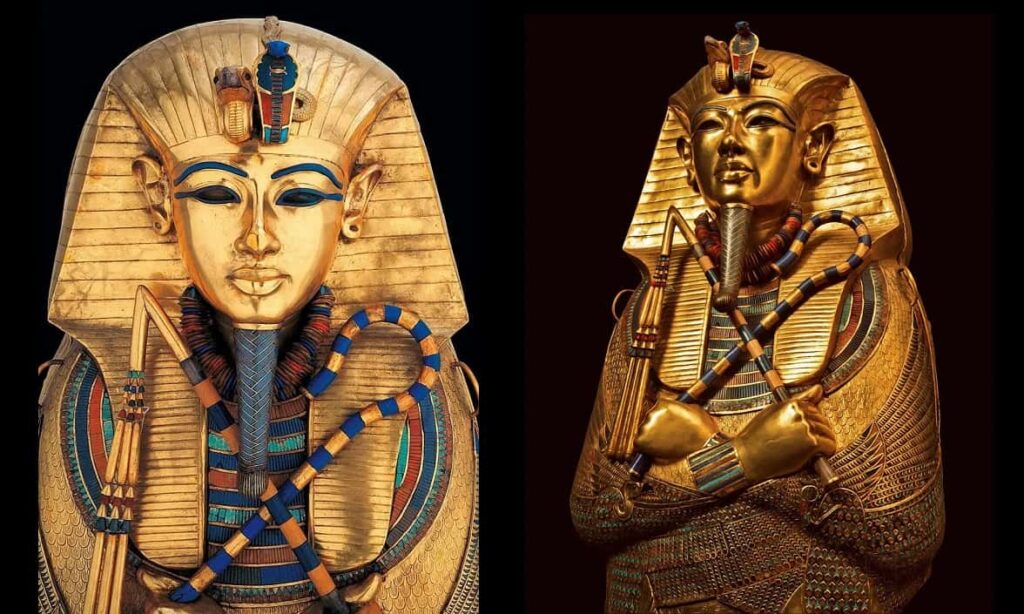
The innermost gold coffin of Tutankhamun is one of the finest masterpieces of ancient Egyptian craftsmanship. Made of solid gold, this magnificent anthropoid coffin is adorned with intricate engravings, hieroglyphic inscriptions, and inlays of semiprecious stones and colored glass.
The coffin depicts the young pharaoh in the form of Osiris, the god of the afterlife, with his arms crossed over his chest, holding the sacred heka scepter (crook) and flail, symbols of royal authority. A vulture and a rearing cobra (uraeus) protect his forehead, while his divine beard is fashioned from gold inlaid with blue glass.
Protective deities representing Upper and Lower Egypt extend their wings across the coffin, symbolically shielding the deceased king and ensuring his protection in the afterlife.
Weighing approximately 110.4 kilograms (243.4 pounds), the solid gold coffin originally contained Tutankhamun’s mummy, which was adorned with the iconic golden burial mask that has become one of the most recognizable treasures of ancient Egypt.
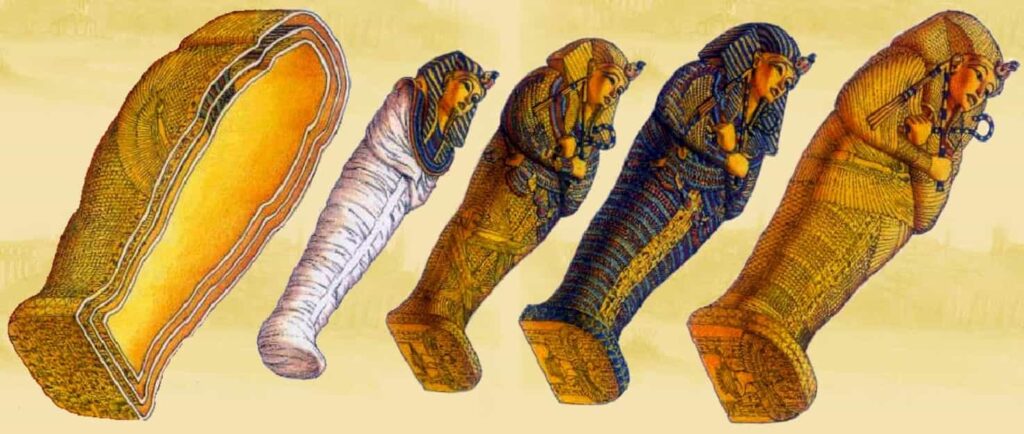
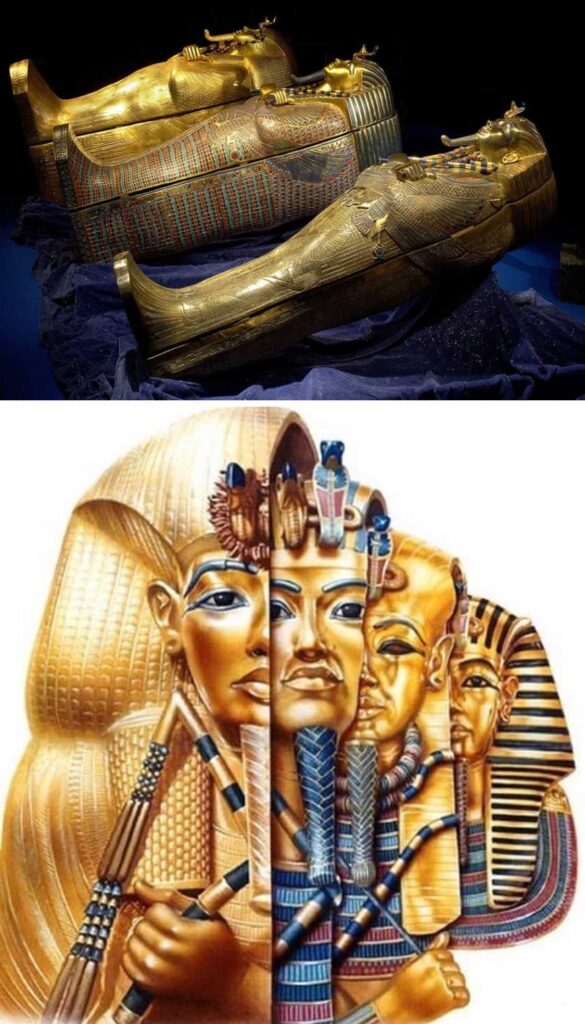
This coffin is the third and innermost of the three anthropoid coffins discovered inside Tutankhamun’s quartzite sarcophagus in his tomb, KV62, in the Valley of the Kings. Following the discovery of the tomb in 1922, the innermost gold coffin and the middle gilded wooden coffin were transferred to the Egyptian Museum in Cairo.
The largest and outermost coffin, made of gilded wood, was left inside the tomb for decades. On July 12, 2019, it was transferred to the Grand Egyptian Museum (GEM) for restoration and preservation. The three coffins are now displayed together in the museum’s Tutankhamun galleries, bringing the remarkable funerary ensemble together for the first time since its discovery.
Tutankhamun, often known as the Golden Pharaoh, was a ruler of Egypt’s 18th Dynasty during the New Kingdom. Although he died at a young age, his extraordinary funerary treasures and the discovery of his largely intact tomb have made him one of the most famous pharaohs in ancient Egyptian history.
His tomb was discovered in November 1922 by British archaeologist Howard Carter in the Valley of the Kings, on the west bank of the Nile at Luxor. The discovery attracted worldwide attention and became one of the most celebrated archaeological discoveries of the 20th century.
The burial chamber measured approximately 6.37 meters long and 4.02 meters wide. At its center stood a massive rectangular sarcophagus carved from yellow quartzite. Its four corners were adorned with protective goddesses—Isis, Nephthys, Neith, and Selket—whose outstretched wings symbolically guarded the sarcophagus and the king’s mummy.
Inside this stone sarcophagus were four nested gilded wooden shrines surrounding three anthropoid coffins, with the innermost coffin of solid gold serving as the final resting place of the young pharaoh’s mummy.