In ancient Egyptian mythology, Osiris was regarded as the first divine king of Egypt and one of its most important gods. He was believed to have brought civilization to humanity by teaching agriculture, establishing laws, and introducing the arts. His reign symbolized order, prosperity, and justice, making him one of the most beloved figures in Egyptian religion.
Who Was Osiris?
According to Egyptian mythology, Osiris came to Earth to establish ma’at—the divine principle of order, balance, and justice. He taught people agriculture, music, weaving, and other essential skills that allowed civilization to flourish. Under his rule, Egypt prospered, and he became closely associated with fertility, regeneration, and abundant harvests.
Following his death and resurrection, Osiris became the god of the afterlife and the divine ruler of the underworld, where he judged the souls of the deceased.
The Family of Osiris
Osiris was the son of Geb, the god of the earth, and Nut, the goddess of the sky. His wife and sister was Isis, one of ancient Egypt’s most powerful goddesses. Together they had a son, Horus, who was conceived after Osiris’s death.
Osiris also had two siblings: Set, the god associated with chaos, storms, and disorder, and Nephthys, who played an important role in the resurrection of Osiris.
How Was Osiris Depicted?
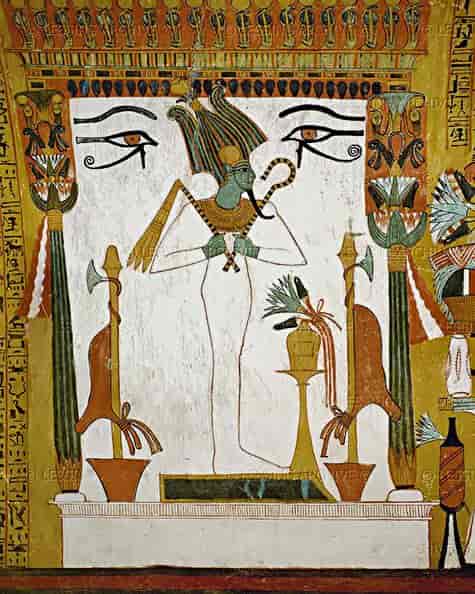
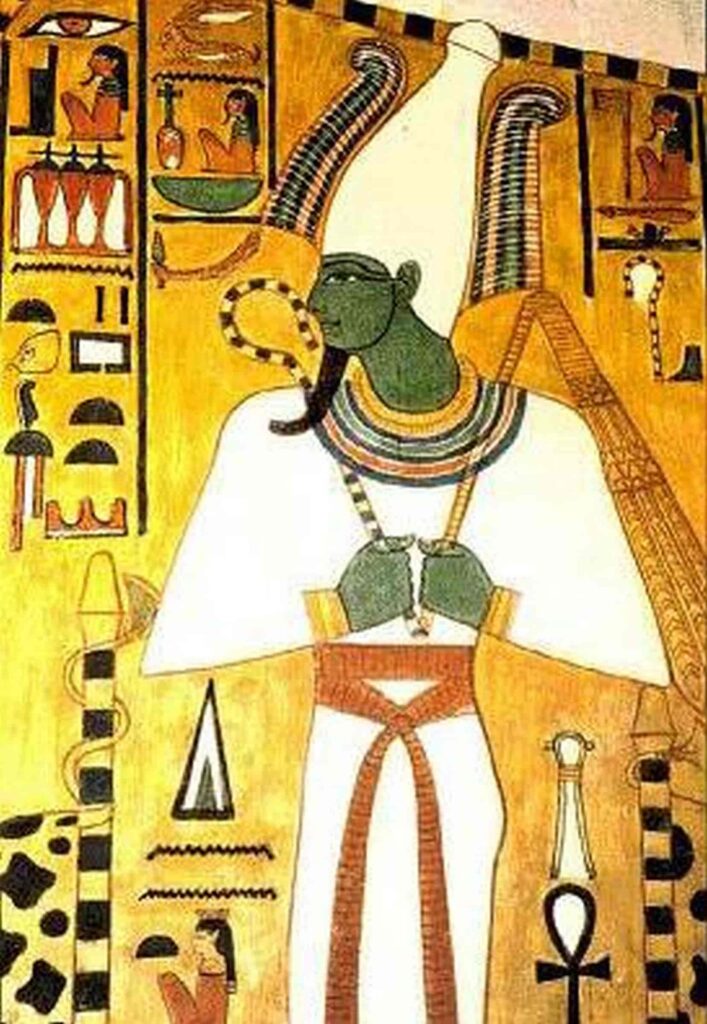
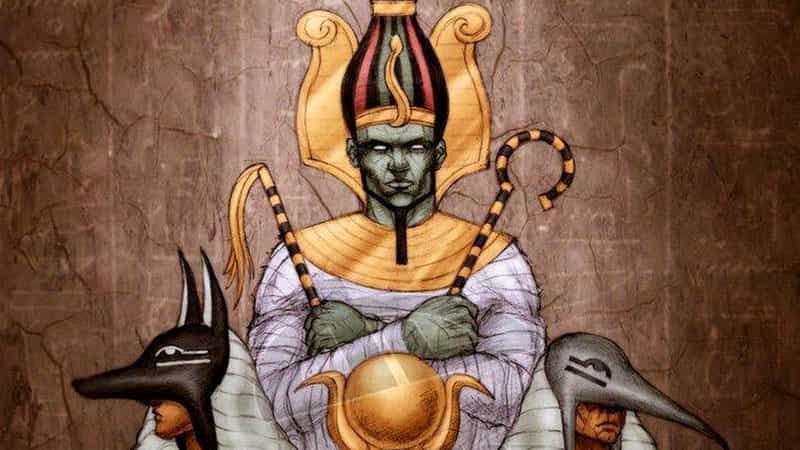
Osiris is usually portrayed as a green-skinned or black-skinned deity wrapped in a mummy’s shroud from the chest downward. His green skin symbolizes rebirth and renewed life, while black represents the fertile soil left behind by the annual flooding of the Nile.
He typically wears the Atef Crown, a white crown flanked by ostrich feathers, and holds the crook and flail, symbols of kingship and royal authority. Like many Egyptian deities, he is shown with the traditional false beard worn by pharaohs.
The Myth of Osiris
According to Egyptian mythology, Set grew jealous of Osiris and plotted to seize the throne. He tricked Osiris into lying inside a beautifully crafted chest, which was then sealed and thrown into the Nile.
After an extensive search, Isis recovered her husband’s body. However, Set discovered it and, in his rage, cut Osiris into pieces, scattering them across Egypt.
With the help of Nephthys and Anubis, Isis gathered the scattered remains. Anubis embalmed Osiris, making him the first mummy according to Egyptian tradition. Through Isis’s magic, Osiris was briefly restored to life, allowing Horus to be conceived.
Although Osiris did not return to rule the living, he became the eternal ruler of the underworld and the judge of the dead.
Why Was Osiris Worshiped?
Osiris became one of the most widely worshiped gods in ancient Egypt because he represented rebirth, renewal, and the promise of eternal life. His annual cycle of death and resurrection was closely linked to the flooding of the Nile and the renewal of vegetation, making him a powerful symbol of fertility and regeneration.
For the ancient Egyptians, the story of Osiris offered hope that death was not the end but the beginning of a new existence.
The Cult of Osiris
The principal cult center of Osiris was Abydos in Upper Egypt, one of the most sacred religious sites in the country. Egyptians believed that the dramatic events surrounding the death, resurrection, and triumph of Osiris were commemorated there through religious festivals and ceremonial processions.
Pilgrims from across Egypt traveled to Abydos to honor Osiris, and many hoped to be buried nearby so they could share in his promise of eternal life.